
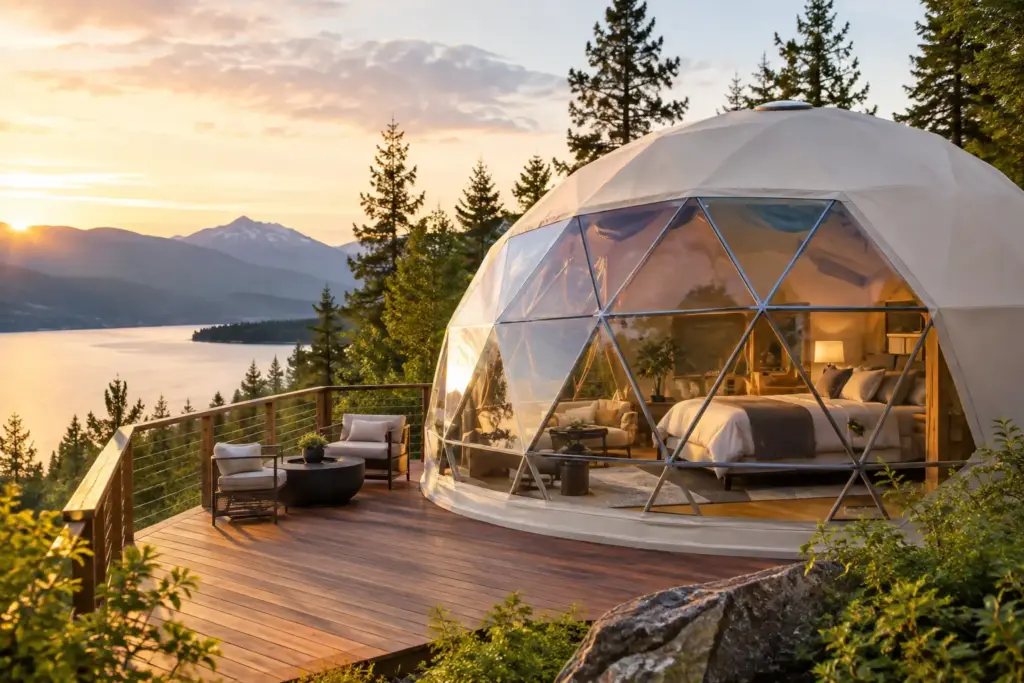
A guest may book for the novelty of sleeping beneath a curved roofline, but they decide whether the stay was worth a premium rate based on comfort, privacy, and the feeling that every detail belongs in the setting. The luxury dome features guests value are not simply decorative upgrades. They shape reviews, repeat bookings, rate strength, and the reputation of the property itself.
For outdoor hospitality operators, the most successful dome is one that photographs beautifully before arrival and performs effortlessly once the guest steps inside. That balance is where a memorable experience becomes a dependable revenue-generating asset.
Luxury Dome Features Guests’ Value From the First Look
The first impression begins well before check-in. A dome’s sculptural form, panoramic geometry, and placement within the landscape create an immediate sense of occasion. Guests are not looking for a conventional hotel room set outdoors. They want a private sanctuary that makes the natural setting feel closer, more intentional, and more elevated.
Expansive windows are central to that experience. They frame forest, mountain, desert, lake, or meadow views as part of the interior design, giving even a compact footprint an open, generous feel. A transparent ceiling panel can add another layer of appeal, particularly where dark skies, seasonal meteor showers, or treetop views are part of the destination story.
That said, visibility must be balanced with control. Floor-to-ceiling glazing facing a neighboring unit, parking area, or heavily traveled path can diminish the retreat guests expect. Strong site planning pairs panoramic views with thoughtful orientation, privacy screening, and enough separation between units to preserve a feeling of escape.
Climate Comfort Makes Luxury Credible
No view compensates for a dome that feels cold at night, overheated in the afternoon, or humid after a shower. For premium accommodation, climate performance is not a back-of-house technicality. It is one of the most valuable guest-facing features an operator can provide.
Insulated, weatherproof construction supports a stable interior environment through changing conditions. When paired with an appropriately sized heating and cooling strategy, guests can enjoy the landscape without feeling exposed to it. That distinction matters in destinations where weather can shift quickly, and it is essential for operators pursuing longer seasons or year-round occupancy.
Energy efficiency also carries commercial value. Lower energy demand can support operating margins over time, while dependable thermal performance helps reduce the risk of comfort-related complaints. The right specification depends on climate, elevation, site exposure, local utility access, and intended operating season. A mild-weather property may prioritize ventilation and shading, while a northern retreat must place insulation, snow-load considerations, and heating reliability at the center of the design brief.
A Real Bed Changes the Entire Stay
Guests can appreciate adventure without wanting to sacrifice sleep. A high-quality mattress, substantial bedding, bedside lighting, and convenient power access turn a striking dome into a place guests want to linger. These are familiar hospitality comforts, but in a nature-forward setting they feel especially considered.
The interior should support both rest and ritual. A well-positioned bed gives guests a view worth waking up to, while a small seating area creates space for morning coffee, reading, or simply watching the weather move through the landscape. Dimmable lighting helps the room shift from practical to atmospheric without overwhelming the night sky beyond the walls.
Avoid filling the interior solely for the sake of amenities. Too much furniture can make a dome feel smaller and disrupt the clarity of its architecture. The strongest layouts maintain open circulation, give the bed visual importance, and reserve enough room for luggage, robes, and the everyday needs that make a stay feel easy.
Private Bathing Is Often the Rate Driver
For many upscale travelers, a private bathroom is the dividing line between a memorable glamping stay and a compromise. A thoughtfully designed en-suite bathroom, or a private bath facility immediately adjacent to the dome, supports higher nightly rates and expands appeal to guests who may not otherwise consider outdoor lodging.
Warm water, excellent ventilation, attractive finishes, reliable plumbing, and generous towels matter more than an oversized bathroom. If the site cannot support in-unit plumbing, the alternative must still feel intentional and private. A detached bathhouse can work well when it is beautifully designed, close to the dome, lit safely, and protected from the elements.
Outdoor showers and soaking tubs add emotional appeal, particularly for romantic getaways and wellness-oriented properties. Their value depends on privacy, maintenance capacity, water management, and seasonality. A tub with an exceptional view can become the image guests share, but only if it is easy to clean, reliably heated, and genuinely secluded.
The Best Dome Design Creates Privacy Without Isolation
Guests want immersion in nature, not the sense that they are on display. Privacy is therefore one of the luxury dome features guests value most, even when they do not name it directly in a booking search.
This starts with spacing and circulation. Arrival routes should feel clear without forcing guests through another unit’s personal area. Decks, fire features, and outdoor bathing zones need sightline protection. Native planting, changes in grade, architectural screens, and strategic orientation can provide privacy while preserving the views that make the site valuable.
Sound control deserves similar attention. A property designed for couples seeking quiet will struggle if guests can hear conversations, music, or vehicle doors from the next accommodation. Separating units with landscape and thoughtful placement protects the premium atmosphere more effectively than relying on house rules after guests arrive.
Outdoor Living Extends the Experience
A dome becomes more than a bedroom when the threshold between indoors and outdoors is designed with care. A covered entry or private deck gives guests a place to sit outside in light rain, set down gear, and settle into the landscape. Fire pits, comfortable seating, and protected dining areas can extend time on site and encourage guests to book the experience rather than simply use it as a place to sleep.
The best outdoor features reflect the property’s operating reality. In a remote location, a simple, durable fire feature may be more valuable than an elaborate outdoor kitchen that demands constant maintenance. At a wellness retreat, a meditation deck, cedar sauna, or cold-plunge area may align more closely with the guest promise. At an event venue, flexible lounge space may serve both overnight guests and private functions.
Every exterior amenity should be easy to reset between stays. Luxury is undermined when a guest arrives to ash, wet cushions, a cold tub, or furniture that has been damaged by weather. Operational simplicity is part of the experience.
Small Conveniences Protect Five-Star Reviews
Guests remember friction. They notice inadequate luggage space, poor lighting on the path to the dome, weak Wi-Fi when it was expected, confusing climate controls, and nowhere to hang a wet jacket. These may not be the features that lead a listing photo, yet they often determine whether the stay earns an enthusiastic review.
Clear arrival instructions, self-check-in that feels secure, reliable locks, accessible outlets, reading lights, blackout shades where needed, and well-designed storage all reinforce a sense of care. In remote settings, dependable connectivity can be a selling point for some audiences, while intentionally limited service may suit a digital-detox retreat. The key is to set expectations honestly and design the offering around the guest you intend to attract.
Accessibility should also be considered early, rather than treated as an afterthought. Graded paths, stable decking, thoughtful entry dimensions, and adaptable interior layouts can broaden the market for a property while making movement easier for all guests.
Build Features Around the Stay You Want to Sell
Not every luxury dome needs every amenity. A remote stargazing retreat may earn its premium through dark-sky views, a telescope, exceptional bedding, and quiet. A resort-adjacent dome may benefit more from private bathrooms, polished dining access, and all-season climate control. The right investment follows the guest journey, local demand, staffing model, and the rate the market can support.
For operators planning multiple units, consistency matters as much as individual design. Modular dome structures can make it easier to expand thoughtfully, protect the guest standard across the property, and add inventory with less site disruption than conventional construction. StarWild Domes helps operators pair that design freedom with the durability and operational practicality required for premium outdoor hospitality.
The most valuable feature is ultimately the one guests can feel without having to think about it: the room is warm, the bed is inviting, the view is extraordinary, and the property gives them space to reconnect. Build around that feeling, and the dome becomes not just a place to stay, but a reason to travel.