
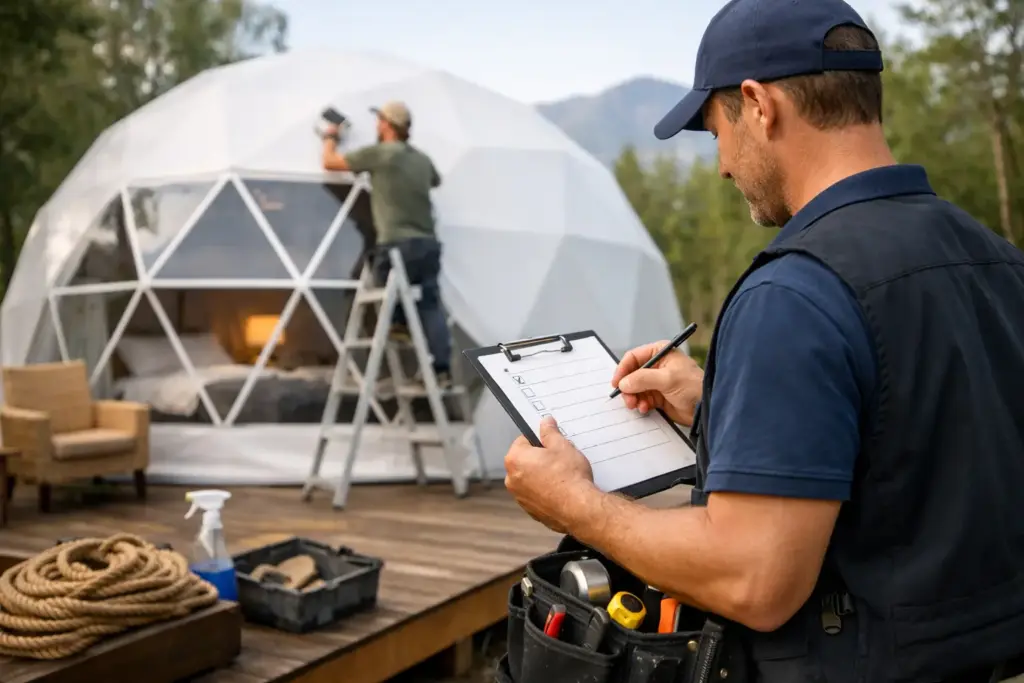
A premium dome can create the kind of stay guests remember long after checkout: a warm bed beneath the stars, panoramic views, and the rare feeling of being immersed in nature without leaving comfort behind. Protecting that experience requires a disciplined glamping dome maintenance checklist. For hospitality operators, maintenance is not simply a facilities task. It is how you preserve the nightly rate, prevent avoidable downtime, and safeguard a revenue-producing asset.
Geodesic domes are designed for durability, efficient performance, and all-season appeal. Still, their envelope, frame, foundation, and mechanical systems work together as one guest-facing environment. A small issue with a zipper, seal, drainage path, or HVAC filter can quickly become a comfort complaint if it goes unnoticed. The right routine keeps your property looking considered, operating efficiently, and ready for the next arrival.
Build a Maintenance Rhythm Around Your Booking Calendar
The most effective maintenance plan has three layers: a brief turnover inspection between guests, a monthly operational review, and a more detailed seasonal inspection. Frequency should reflect your climate, occupancy, surrounding trees, and dome features. A forested site with heavy snow, wind exposure, or frequent temperature swings needs more attention than a sheltered destination with mild weather.
Assign ownership clearly. Whether the work is handled by an on-site host, housekeeping lead, property manager, or maintenance contractor, each inspection should be documented with the date, findings, photographs, and corrective action. This creates accountability and helps reveal recurring issues before they affect occupancy.
Treat maintenance windows as part of operations, not as an interruption to them. For multi-unit retreats, stagger deeper inspections across the calendar so the full inventory is never taken offline at once. This approach supports guest continuity while protecting the long-term value of the property.
Between Every Guest: Protect the First Impression
A guest should never be the first person to notice a loose fitting, watermark, or failing amenity. During every turnover, inspect the dome from both outside and inside before resetting the space.
Walk the exterior perimeter and look for pooled water, shifted gravel, fallen branches, standing snow, or signs of animal activity. Confirm that the entrance platform, steps, railings, and exterior lighting are clean, stable, and safe. A luxury stay begins before the door opens.
Inside, look up as well as around. Check the interior liner and visible membrane for moisture, stains, punctures, or tension changes. Test the entry door, windows, ventilation openings, and any zippers or closures. They should operate smoothly and close fully without forcing them. Check that furnishings have not rubbed against the wall or ceiling material, especially near transparent panels where scratches are more noticeable.
Finish with a simple comfort test: run the heating or cooling system, verify that lights and outlets work, check smoke and carbon monoxide alarms, and confirm that Wi-Fi, water, and hot water are functioning where provided. These details are operationally small but commercially significant. They protect reviews, reduce guest calls, and reinforce the premium standard behind your rate.
Monthly Glamping Dome Maintenance Checklist
Monthly inspections are the right time to move beyond appearance and assess performance. Schedule them during a low-arrival period, ideally after cleaning but before the unit is released for booking.
Focus on these core areas:
- Membrane and transparent panels: Inspect for tears, abrasions, clouding, discoloration, loose seams, and areas where debris may be holding moisture against the surface. Use only cleaning products approved for the specific material. Harsh chemicals, abrasive pads, and pressure washing at close range can shorten the life of a premium cover.
- Frame and connections: Look for corrosion, chipped finish, loose bolts, or unusual movement at connection points. Tighten or service components according to the manufacturer’s guidance rather than over-tightening hardware.
- Anchoring and platform: Inspect anchors, foundation connections, decking, and structural supports for shifting, rot, cracks, washout, or frost-related movement. A stable base protects the dome’s geometry and helps doors, windows, and seals continue to align properly.
- Seals, drainage, and ventilation: Examine seams, weather seals, roof penetrations, gutters, drainage channels, and vents. Clear leaves, needles, and dirt before they become a moisture issue. Good airflow also reduces condensation risk, particularly in cool climates and high-occupancy units.
- Mechanical and safety systems: Clean or replace HVAC filters, test alarms and extinguishers, inspect electrical connections, and check plumbing for slow leaks. If your dome includes a wood stove, fireplace, or other combustion feature, follow its service schedule with particular care.
Avoid the temptation to handle every repair with a generic sealant or hardware-store fix. Some minor adjustments are appropriate for an in-house team, but membrane repairs, structural concerns, electrical work, and persistent leaks deserve qualified support. A fast but incompatible repair can create a larger and more expensive problem later.
Seasonal Care for All-Season Performance
Seasonal maintenance should be planned before the weather shifts, not after a storm reveals a weakness. For operators across the United States and Canada, the winter season is where local conditions matter most.
Before Winter
Inspect the dome’s exterior cover, frame, anchoring, and entry system before the first sustained freeze. Clear drainage routes and confirm water is directed away from the platform and foundation. Service heating equipment, replace filters, test backup power if available, and verify insulation details around doors, windows, and utility penetrations.
Snow management should follow the dome manufacturer’s specifications. Geodesic design is inherently efficient at distributing loads, but snow accumulation varies by elevation, temperature, wind, and roof pitch. Do not allow heavy buildup or ice dams to become an unmanaged risk, and never use sharp tools that can damage the cover.
Spring and Wet-Season Readiness
As snow melts or rainy weather begins, inspect for drainage changes, soft ground, erosion, and water intrusion. Moisture often reveals itself first as condensation, a musty odor, or a small stain near a seam. Address the cause rather than only cleaning the symptom.
Spring is also an ideal time to wash the exterior using approved methods, remove winter debris, inspect landscaping, and evaluate whether trees need pruning. Keep branches safely away from the dome envelope. This reduces abrasion, limits leaf buildup, and lowers the chance of storm damage.
Summer and High-Occupancy Season
In warm months, cooling, ventilation, pest prevention, and UV exposure move to the forefront. Confirm that shades, screens, and ventilation systems are working as intended, especially in domes with panoramic glazing or transparent ceiling features. Inspect for insects at entry points and utility penetrations, and keep vegetation trimmed back from the structure.
High occupancy creates more wear on flooring, fixtures, furniture, and bathrooms than the dome shell itself. Review guest feedback for recurring notes about temperature, light, noise, or door operation. Those comments can identify small refinements that improve comfort and protect your positioning as an elevated retreat.
Keep Condensation From Becoming a Guest Complaint
Condensation is one of the most common operational realities in enclosed outdoor accommodations. It is not always a sign of failure. It occurs when warm, humid interior air meets a cooler surface, and it can be more pronounced after showers, cooking, wet clothing, or a full overnight occupancy.
The solution is a balanced system: adequate ventilation, dependable heating and cooling, controlled indoor humidity, and clear guest guidance. Bathroom exhaust fans must work properly, decor must not block ventilation openings, and wet towels or gear must have a designated drying area. In particularly humid or cold regions, a dehumidifier may be a worthwhile operating investment.
If condensation appears repeatedly in the same area, inspect the seal, insulation, airflow path, and nearby heat source. Replacing a towel rack or adding a vent may solve what looks like a structural problem. But if moisture is entering from outside, or if staining persists, escalate the issue promptly.
Maintain the Landscape Around the Dome
The landscape is part of the guest experience, but it also affects the life of the structure. Maintain a clean perimeter that allows water to drain away and gives your team room to inspect the exterior. Avoid piling mulch, soil, snow, or decorative materials directly against the base.
Thoughtful site care also supports the sanctuary guests expect. Keep pathways level and illuminated, manage vegetation for privacy without restricting airflow, and review tree health before storm season. For event venues and destination properties, this work protects both curb appeal and safety during high-traffic periods.
Plan for Repairs Before They Become Revenue Loss
Keep a small inventory of approved consumables and replacement parts appropriate for your dome model, such as filters, bulbs, batteries, weather stripping, and basic hardware. Maintain contact information for qualified local trades as well as your structure supplier. When a repair is needed, speed matters, but so does using compatible materials and methods.
A preventative maintenance budget is easier to justify when viewed against the cost of a canceled reservation, a poor review, or emergency labor during peak season. Premium outdoor hospitality performs best when the property feels effortlessly cared for. Behind that feeling is a practical operating system, consistent standards, and a willingness to act early.
Every inspection is an opportunity to preserve the quiet confidence guests feel when luxury meets nature. Keep the checklist close, train the team to notice small changes, and let the condition of every dome reflect the caliber of experience your property promises.