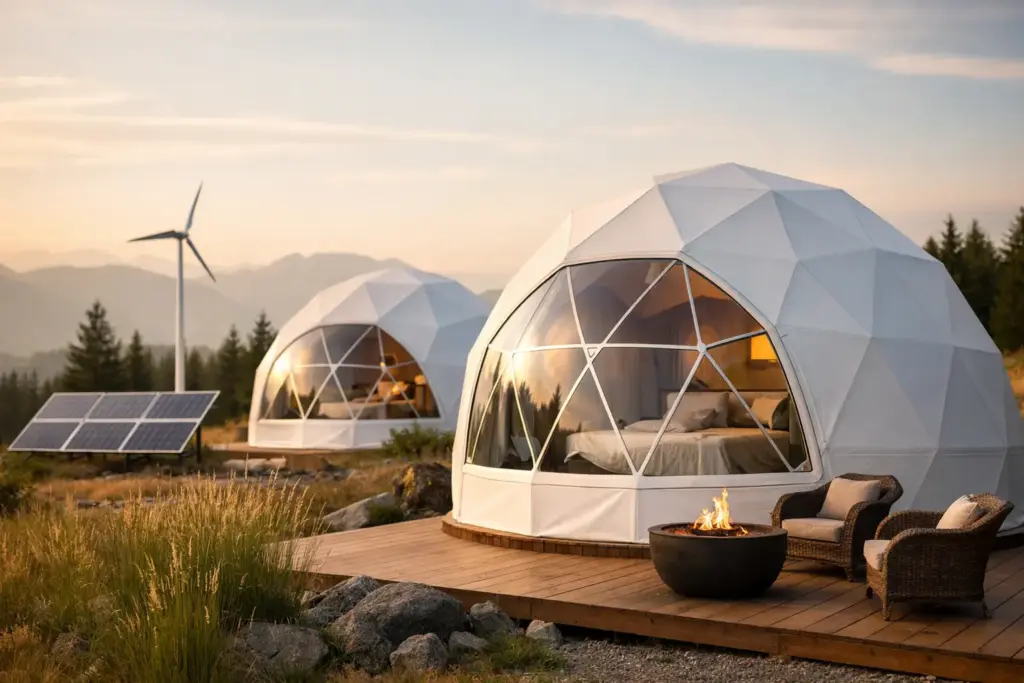
A guest who books a dome in January is not looking for compromise. They want warmth, stillness, a memorable view, and the sense that nature is right outside without discomfort getting in the way. That is why energy efficient dome lodging matters so much in outdoor hospitality. It is not just about lowering utility bills. It is about protecting the guest experience, extending your booking season, and building a lodging product that performs as beautifully as it photographs.
For resort owners, retreat operators, and landowners developing premium stays, efficiency is often the difference between a dome that feels like a profitable year-round asset and one that works only in mild weather. The right structure can support luxury positioning while keeping heating and cooling demands far more manageable than many people expect.
Why energy-efficient dome lodging has real business value
In outdoor hospitality, operating costs shape margins just as much as nightly rates. A visually striking accommodation may generate attention, but if it leaks heat, struggles in summer, or creates inconsistent interior comfort, that attention becomes expensive to maintain. Guests notice temperature swings quickly. They also notice when a property feels thoughtfully designed for all-season use.
Energy-efficient dome lodging supports the business from several angles at once. It can reduce ongoing utility costs, improve occupancy in shoulder seasons, and create a more stable interior environment that helps preserve furnishings, finishes, and equipment. For operators in colder regions of the U.S. and Canada, or for properties dealing with both hot summers and chilly nights, that operational stability has direct financial value.
There is also a positioning advantage. Premium guests are increasingly drawn to accommodations that feel both luxurious and responsible. They want immersion in nature, but they also want comfort that feels intentional. When a dome is properly insulated and designed for climate performance, the stay feels elevated rather than improvised.
What makes a dome more energy efficient
Not every dome performs the same way. The idea of a dome alone does not guarantee efficiency. What matters is how the structure is engineered, insulated, sealed, and equipped for the climate it will serve.
The first factor is insulation. High-quality insulation helps retain conditioned air and reduces strain on heating and cooling systems. In a hospitality setting, this matters well beyond monthly bills. Better insulation supports quieter operation, steadier indoor temperatures, and a more comfortable sleeping environment, which can influence reviews as much as design details do.
The second factor is the building envelope. Weatherproofing, tight seals, and durable materials help prevent drafts, moisture intrusion, and unnecessary thermal loss. In remote or exposed settings, weak points in the envelope become costly very quickly. Wind, humidity, snow, and heat all test a structure differently, so climate-fit design matters more than broad claims.
Window and panel placement also affect efficiency. Transparent ceiling sections and panoramic openings create the visual drama guests love, but they need to be integrated thoughtfully. More glass can mean more solar gain in some seasons and more heat loss in others. That does not make these features a bad choice. It means they should be balanced with insulation strategy, orientation, and the intended guest use of the space.
Finally, HVAC sizing plays a major role. Oversized systems can cycle inefficiently, while undersized systems may struggle in peak conditions. Efficient dome lodging works best when the structure and the mechanical systems are considered together rather than as separate decisions.
The dome advantage in outdoor hospitality
A well-designed dome offers advantages that go beyond visual appeal. Its form can support efficient air circulation, and its modular construction can reduce the disruption and material waste often associated with conventional building. For hospitality owners who want to bring new inventory online without the long timeline of traditional development, this matters.
That said, efficiency is never just about shape. A poorly insulated dome will still underperform. The advantage comes when the geometry, materials, insulation, and installation quality are aligned.
This is where premium dome suppliers tend to separate themselves from generic alternatives. For a commercial property, the goal is not simply to place an attractive structure on the land. It is to create a revenue-generating accommodation that holds up operationally across seasons and guest expectations. StarWild Domes approaches that challenge from both sides – luxury guest appeal and commercial practicality.
How efficiency shapes the guest experience
Guests rarely describe a stay by saying the thermal envelope was excellent. They describe how the space felt. Quiet. Cozy. Fresh in summer. Warm without being stuffy. Bright in the morning and calm at night. Energy efficiency supports all of that in subtle ways.
When a dome maintains temperature more consistently, guests sleep better. When HVAC systems do not have to work as hard, the environment often feels calmer and more refined. When condensation and drafts are controlled, the interior feels premium rather than temporary.
This is especially important for operators charging premium nightly rates. Guests who pay for upscale glamping expect the experience to match the visual promise. If the room overheats by noon or cools down too fast after sunset, the design loses its power. Comfort is part of luxury.
Efficiency can also expand programming. Wellness retreats, winter escapes, stargazing packages, and shoulder-season romantic stays all become easier to market when the accommodation performs reliably. In that sense, energy efficiency supports revenue creativity as much as cost control.
Planning energy-efficient dome lodging for your climate
A dome that performs well in Arizona may need a different specification than one built for Alberta or upstate New York. Climate, elevation, sun exposure, snow load, wind conditions, and intended seasonality all shape what efficient design should look like.
For colder regions, insulation values, airtight construction, and heating strategy should lead the conversation. Operators often focus on whether a unit can withstand winter structurally, but the better question is whether it can deliver winter comfort profitably. A structure that survives snow is not necessarily a structure that supports strong margins through January.
In hotter climates, solar gain and cooling load become more important. Orientation, ventilation planning, shading strategy, and reflective or heat-resistant materials can make a meaningful difference. If your site experiences large temperature swings between day and night, the goal is to avoid overcorrecting for one condition at the expense of the other.
This is why one-size-fits-all purchasing can become expensive later. A premium dome should be specified with your market, guest profile, and operating calendar in mind.
The ROI conversation owners should actually have
The most useful ROI question is not whether an energy-efficient dome costs more upfront. It usually does. The better question is what that added performance allows you to do.
Can you stay open more months of the year? Can you maintain premium pricing in colder seasons because comfort remains high? Can you reduce utility volatility across multiple units as the property scales? Can you avoid the guest dissatisfaction that comes from temperature complaints, condensation issues, or noisy climate control?
Those are the questions that turn efficiency into a business strategy rather than a construction feature. For properties planning several domes, the impact compounds. Even modest gains in energy performance can add up meaningfully when applied across an expanding hospitality footprint.
There are, of course, trade-offs. A highly transparent dome may offer unforgettable views but require more careful climate planning. A lower-cost structure may reduce initial investment but create higher operating costs and more seasonal limitations. The right decision depends on your rate strategy, your location, and how central year-round operation is to your business model.
Choosing a partner, not just a structure
For hospitality developers, the strongest dome investment is rarely the cheapest shell. It is the product and support system that align with the realities of land development, guest expectations, and long-term operations. Installation logistics, scalability, replacement timelines, and service support all matter.
Energy-efficient dome lodging performs best when it is part of a larger vision – one that sees each unit as both a design statement and a durable hospitality asset. That is especially true for operators building destination properties where every guest stay influences repeat visits, reviews, and brand reputation.
The best projects create a simple feeling for the guest: comfort without effort, nature without exposure, luxury without excess. For the owner, that same project should create something just as valuable – a structure that supports premium positioning while working hard behind the scenes, season after season.
If you are planning to build your business around outdoor stays, efficiency is not a background detail. It is part of what makes the experience viable, scalable, and worth returning to.