A beautiful dome on raw land can look simple from a distance. For an owner or operator, it rarely is. The real value of turnkey glamping dome installation is not just getting a structure in place – it is reducing the friction between a strong concept and a revenue-ready hospitality asset.
For resort owners, retreat operators, and land developers, that distinction matters. A dome is only as valuable as the guest experience it supports and the speed, cost control, and operational clarity behind the build. When the installation process is coordinated from planning through setup, you spend less time managing trades, solving avoidable site issues, and delaying launch.
What turnkey glamping dome installation actually means
In practical terms, turnkey glamping dome installation means you are not buying a dome kit and then being left to coordinate the rest on your own. The process is structured so the path from site evaluation to completed installation is managed as one hospitality-focused project.
That typically includes pre-installation planning, site readiness guidance, dome delivery, assembly, and the core steps needed to bring the structure into usable condition. Depending on the project, it may also involve coordination around foundations, insulation, weatherproofing, utilities, interior fit-out planning, and deployment across multiple units.
The word turnkey can be used loosely in this market, so it is worth asking what is truly included. Some suppliers mean delivered materials. Others mean a finished shell. The strongest turnkey model is one that understands the dome not simply as a structure, but as part of a business you intend to open, book, operate, and scale.
Why hospitality developers choose a turnkey model
Most buyers in this category are not trying to become general contractors. They are trying to build a lodging concept, expand room inventory, or create a distinctive guest environment that justifies premium nightly rates. A turnkey approach supports that goal because it compresses complexity.
Traditional construction often brings long schedules, site disruption, permit variables, and cost layers that can stall momentum. Glamping domes appeal to operators because they offer a faster and more flexible path, but only when installation is handled with discipline. If the dome arrives before the site is ready, or if utility planning lags behind assembly, the speed advantage starts to disappear.
This is where turnkey installation becomes commercially valuable. It creates accountability around sequencing. It also helps protect the brand promise behind the experience – panoramic design, comfort in all seasons, and a polished arrival for guests who expect more than a tent in the woods.
The stages of a turnkey glamping dome installation
Every property is different, but the process usually begins long before the frame goes up. Site review comes first because slope, drainage, soil conditions, access roads, tree cover, weather exposure, and utility availability all affect cost and timing. A striking view is an asset, but only if the placement also supports guest privacy, straightforward servicing, and safe installation access.
The next stage is aligning the dome specification with the business model. A wellness retreat may prioritize serenity, insulation, and spa-style interiors. An event venue may want a flexible gathering space. A resort expansion may focus on repeatable layouts that can scale across several units with operational efficiency. The right dome is not just the one that photographs well. It is the one that fits your pricing strategy, climate demands, and staffing reality.
Once the site plan and dome package are defined, preparation work begins. That may involve foundations or platforms, utility rough-ins, grading, and access coordination. This stage is where many self-managed projects lose time. If installation crews arrive before those pieces are ready, the project pauses. Turnkey coordination helps prevent that kind of mismatch.
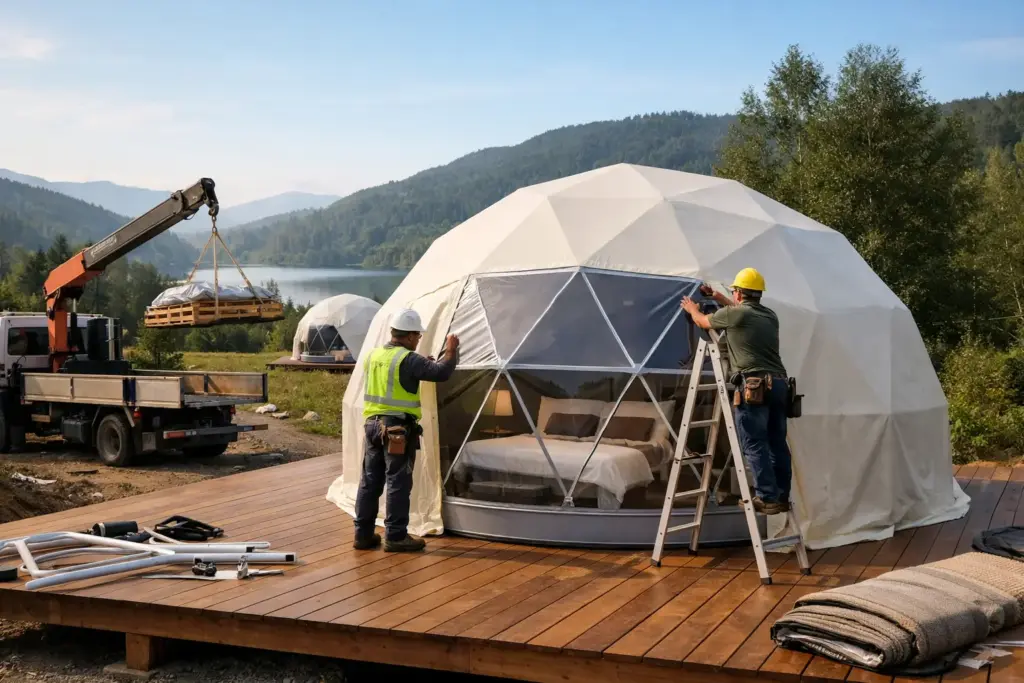
Assembly and enclosure follow. This is where the structure starts to take shape, with the frame, exterior covering, insulation systems, openings, and weatherproofing details installed in sequence. For all-season hospitality use, build quality here matters more than many first-time buyers realize. A dome that looks impressive in launch photos but performs poorly in wind, rain, heat, or winter conditions becomes an operational problem very quickly.
Final setup brings the project closer to guest-ready use. Depending on scope, that can include climate control integration, interior finish planning, lighting, flooring, and the practical details that turn a shell into a premium stay. The best turnkey partners keep the end use in view from the beginning, rather than treating hospitality readiness as an afterthought.
Where the business case gets stronger
A dome installation is rarely just a design decision. It is a capital decision. Owners want to know how quickly the unit can begin generating income, how well it supports premium pricing, and whether it can be replicated across the property without multiplying complexity.
Turnkey delivery helps on all three fronts. First, it can shorten the path to opening because planning and installation are integrated rather than fragmented across separate vendors. Second, it supports consistency. In hospitality, consistency is not a small detail. It affects guest satisfaction, review quality, maintenance patterns, and the confidence to expand into additional units.
Third, it can reduce hidden costs. That does not mean turnkey is always the cheapest line item on paper. In some cases, a piecemeal approach may appear less expensive at the start. But when owners factor in project management time, installation errors, scheduling gaps, and delayed revenue, the lower quote often becomes the more expensive choice.
Trade-offs buyers should understand
Turnkey does not mean every project is identical, and it does not eliminate every variable. Remote locations can still affect logistics. Local permitting can still shape timelines. Harsh climates may require more insulation, stronger mechanical planning, or additional weather considerations. If your property has difficult access or unusual topography, installation may need a more customized approach.
There is also a balance between speed and customization. Highly standardized dome deployments tend to move faster and scale more cleanly. More customized layouts, finish packages, or utility configurations may create a stronger signature experience, but they can add coordination and time. For many operators, the right answer is a repeatable core product with selective premium upgrades where they matter most to guests.
That is especially true for multi-unit developments. One standout dome can validate a concept. Several well-planned domes can build a business. The installation strategy should support not just a first opening but also the next phase of growth.
What to ask before you move forward
A serious hospitality buyer should look past visuals and ask operational questions early. What does the installation scope include, exactly? How is site readiness handled? What assumptions are being made about foundations, utilities, insulation, and interior completion? How well does the structure perform in your climate, not just on a mild spring weekend but across the full season you plan to sell?
You should also ask how the dome supports guest comfort over time. Energy efficiency, weather resistance, and durable materials are not abstract features. They affect utility costs, maintenance demands, and whether the guest experience feels premium in year one and year five.
A qualified partner should be able to speak with equal confidence about aesthetics and operations. That balance is what separates a novelty structure from a serious hospitality asset.
Why premium operators care about installation quality
Luxury in outdoor hospitality is not created by décor alone. It starts with how the structure performs. Guests notice the temperature at night, the sound during a storm, the feeling of security in changing weather, and whether the space feels intentional from arrival to checkout.
That is why installation quality deserves the same attention as design. A premium dome should feel elevated, efficient, and enduring. It should support the story you want your property to tell – privacy, immersion, comfort, and a memorable sense of place – while also working hard behind the scenes as a practical revenue unit.
For operators building in competitive markets, that combination matters. Distinctive architecture may drive initial interest, but reliable execution is what protects margins and reputation. StarWild Domes approaches turnkey projects with that reality in mind, helping owners create accommodations that are visually compelling, commercially practical, and built for long-term use.
The most successful dome projects are not the ones that simply get installed. They are the ones that open with purpose, perform across seasons, and give guests a reason to return.