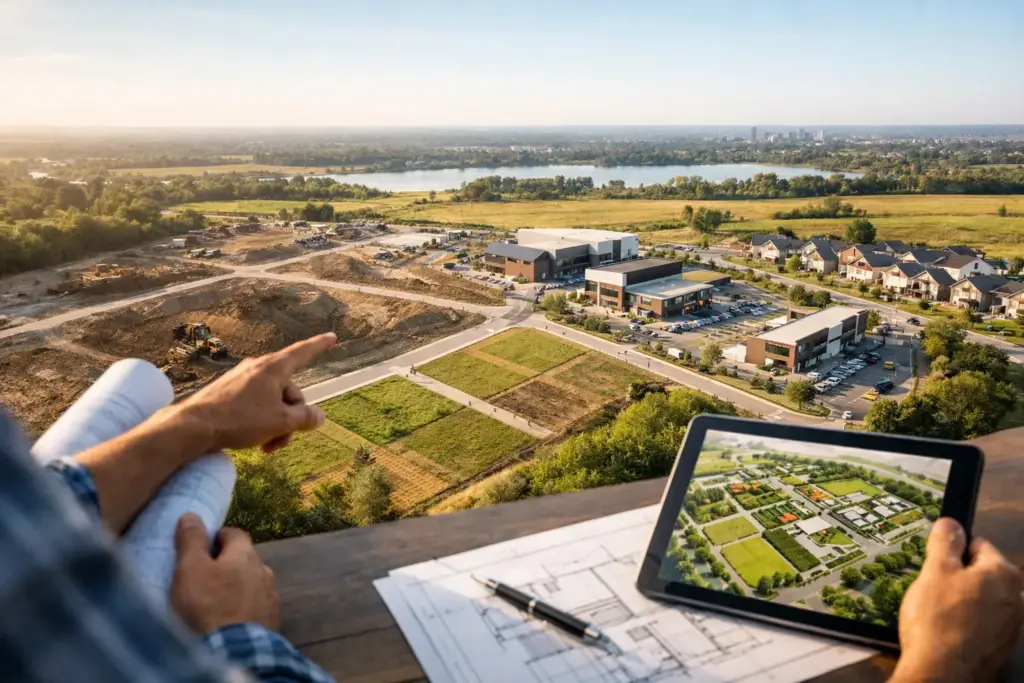
A beautiful piece of land can stay expensive for years if it never becomes a product. That is the real challenge of revenue-generating land development. The question is not simply how to improve a property. It is how to shape land into an experience people will pay for, return to, and recommend.
For resort owners, retreat operators, and land investors, the most valuable development today often is not the heaviest or most permanent. It is the format that brings in revenue sooner, preserves the character of the site, and gives you room to scale without overbuilding. In outdoor hospitality, that shift has changed what profitable land use looks like.
What revenue-generating land development really means
At its core, revenue-generating land development is the process of turning raw land, underused acreage, or underperforming property into an income-producing asset. That can mean accommodations, event space, wellness facilities, or a mixed-use hospitality concept designed around the natural appeal of the site.
The highest-performing projects tend to start with a clear commercial lens. Instead of asking, “What can I build here?” strong operators ask, “What will guests pay a premium for here, and how quickly can it begin producing cash flow?” That distinction matters. It keeps development aligned with demand, operational reality, and return on investment.
Traditional construction still has a place, especially for large master-planned resorts. But it often comes with longer timelines, more site disruption, and higher capital exposure before the first booking arrives. For many owners, that is too slow and too rigid. A smarter approach is to begin with flexible hospitality assets that let the land start working sooner.
Why outdoor hospitality is driving a new model
Guest demand has moved beyond standard rooms and predictable stays. Travelers want privacy, immersion, design, and a stronger sense of place. They are willing to pay more for accommodations that feel memorable and elevated, especially when comfort is not sacrificed.
That is why outdoor hospitality has become such a compelling path for revenue-generating land development. It allows landowners to monetize scenery, seclusion, and natural settings without erasing the very qualities that make the property desirable. A forest edge, ridgeline, meadow, desert parcel, or lakeside clearing can become a premium inventory asset when it is paired with the right structure and guest experience.
This model also works because it creates multiple layers of value. The land itself remains central to the offering, but it is no longer passive. It becomes the backdrop for lodging revenue, event bookings, wellness programming, seasonal packages, and longer-term brand positioning.
The strongest revenue comes from experience, not just square footage
In hospitality, revenue is rarely tied to size alone. A larger building does not automatically produce better returns. In many cases, a smaller, more distinctive accommodation can outperform conventional inventory if it commands higher nightly rates and stronger occupancy.
That is where design-forward structures matter. Premium dome accommodations, for example, combine visual impact with operational practicality. They create the kind of stay guests photograph, share, and seek out, while also supporting insulation, weather protection, and year-round usability. For owners, that means the unit is not simply a structure. It is a revenue engine shaped around experience.
This matters even more in competitive markets. If your property offers something that feels interchangeable, pricing pressure follows. If it offers something distinctive and emotionally resonant, pricing power improves. That difference can shape the entire economics of a site.
How to evaluate land for development potential
Not every parcel should be developed the same way. A good site is not just attractive. It must also support access, utilities, guest circulation, and the kind of experience your market wants.
Start with the physical layout. Grade, drainage, tree cover, views, privacy, and access routes all influence what can be placed where. A property with dramatic scenery but difficult logistics may still work, but it will require a more thoughtful deployment strategy. Likewise, flat and accessible land may be easy to build on but less compelling unless the guest experience is carefully curated.
Then look at market positioning. Is the land close enough to a drive-market city to support weekend demand? Does it fit a luxury couples retreat, a family glamping concept, a wellness destination, or an event-focused venue? Revenue-generating land development succeeds when the site and the business model reinforce one another.
Regulatory review is equally important. Zoning, permitting, health requirements, wastewater planning, fire access, and local hospitality rules can shape timelines and feasibility. Sophisticated operators do not treat compliance as an afterthought. They build around it early to avoid expensive redesigns later.
Why speed to market changes the numbers
One of the most overlooked parts of development is timing. A project that takes two or three years to launch may still become profitable, but it ties up capital longer and delays market feedback. A project that opens sooner can begin producing revenue, refining its guest offering, and funding future phases far earlier.
This is one reason modular and low-disruption hospitality structures have become so attractive. Faster installation reduces the lag between concept and cash flow. It also lowers the risk of overcommitting before demand is proven.
For many owners, phased growth is the smarter path. You might begin with a handful of premium accommodations, test occupancy and average daily rate, and then expand into additional units, spa facilities, event infrastructure, or food-and-beverage programming. The land develops in measured steps rather than one oversized leap.
That flexibility is especially valuable in uncertain markets. It gives you room to respond to demand instead of forcing the market to absorb a fixed and expensive buildout.
Revenue-generating land development works best when operations stay practical
Luxury only performs well when operations can support it. A property may look extraordinary in renderings, but if housekeeping is inefficient, maintenance is constant, or seasonality cripples utilization, margins suffer.
That is why durable, insulated, weather-resistant structures deserve serious attention. Premium outdoor accommodations should feel elevated for guests and manageable for operators. Energy efficiency, ease of cleaning, resilience across seasons, and the ability to install with minimal site disruption all contribute directly to commercial performance.
There is also a long-term advantage in flexibility. Some sites evolve. A retreat property may add lodging. An event venue may introduce overnight stays. A resort may test a new zone before committing to a full expansion. Structures that can be deployed in phases or relocated if needed give owners more control over how the property matures.
This is where companies such as StarWild Domes fit naturally into the development conversation. The value is not just aesthetic. It is the combination of panoramic guest appeal, all-season usability, modular deployment, and scalable growth potential that helps landowners build their business with more confidence.
The trade-offs to consider before you build
There is no single formula for successful land development. A luxury dome retreat on wooded acreage may outperform in one region and struggle in another if pricing, access, or seasonality are misjudged. High-end positioning can lift revenue, but it also raises guest expectations around design, service, and amenities.
It also depends on whether your property is meant to be a stand-alone destination or an extension of an existing business. An established resort can often add premium outdoor lodging and benefit from shared operations, brand recognition, and existing demand. A new independent concept may have stronger storytelling potential but will need to work harder on market entry and guest acquisition.
Capital strategy matters too. Some owners should build a compact, premium first phase that proves the model. Others may have the land, financing, and market confidence to launch at a larger scale. The right answer depends on your timeline, risk tolerance, and operational readiness.
Where the best opportunities are now
The strongest opportunities in revenue-generating land development are often found where natural beauty meets underserved demand. Properties within a few hours of major metro areas remain especially attractive because they appeal to weekend travelers seeking escape without complicated travel. Sites with privacy, views, and a clear identity tend to command the highest premiums.
There is also growing opportunity in hybrid concepts. A property can blend overnight lodging with wellness programming, intimate events, corporate retreats, or seasonal experiences. This creates more than one revenue stream from the same land base, which can improve resilience and increase annual earning potential.
What matters is discipline. The best projects do not try to be everything at once. They choose a clear guest promise, build around the strengths of the land, and use development formats that support both experience and economics.
Land has always held value. What has changed is the speed and sophistication with which it can be turned into hospitality income. If you own a compelling site, the opportunity is no longer limited to traditional construction or slow, capital-heavy expansion. With the right concept, the right structure, and a clear operating plan, the land can begin doing what it should have been doing all along – earning its place on your balance sheet.