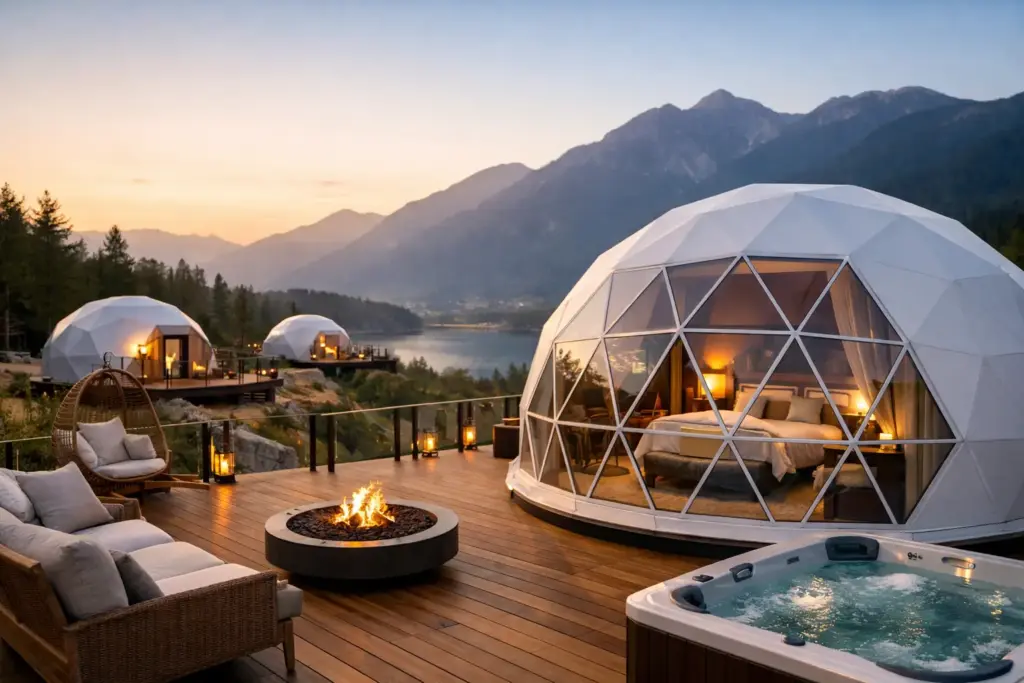
A guest checks in expecting fresh air and quiet, but what they remember is the moment they step inside a space that feels both sheltered and cinematic. That is the commercial appeal of luxury domes. They do more than add inventory to a property – they create a category of stay that feels exclusive, memorable, and easier to market at a premium.
For resort owners, retreat operators, and landowners looking to build revenue from outdoor property, the value goes beyond appearance. A well-designed dome can help you launch faster than traditional construction, reduce site disruption, extend your usable season, and offer a distinctive hospitality product that stands out in a crowded booking landscape. When the structure is built for all-season performance, guest comfort, and operational efficiency, it becomes less of a novelty and more of a strategic asset.
Why luxury domes work so well in outdoor hospitality
Hospitality buyers are not simply looking for shelter. They are looking for a format that sells the experience before the guest arrives. Luxury domes do that exceptionally well because the architecture itself becomes part of the stay. The curved form, panoramic views, and connection to the landscape create immediate visual appeal, which matters in an industry where booking decisions are often made from a few images.
That visual advantage has direct business value. Premium outdoor accommodations can command stronger nightly rates when they feel differentiated, private, and design-forward. A dome that frames the forest, desert, mountain, or waterfront around it gives guests something conventional rooms often cannot – a sense of immersion without sacrificing comfort.
There is also a practical side that appeals to operators. Compared with full-scale traditional builds, dome structures can offer a simpler path to expansion. Installation can be quicker, planning can be more flexible, and modular deployment makes phased growth more realistic. For a property owner testing demand, that matters. For an established resort adding a new accommodation tier, it matters even more.
What separates premium luxury domes from basic glamping tents
Not every dome belongs in the luxury category. The difference is rarely one feature alone. It comes from how the structure performs over time and how confidently it supports a hospitality business.
A premium dome needs to feel substantial. Guests may love the romance of outdoor lodging, but they still expect climate control, quiet, privacy, and a polished interior environment. That means insulation matters. Weatherproofing matters. Energy efficiency matters. If the structure struggles in heat, cold, wind, or rain, the guest experience declines quickly and operating headaches rise with it.
The best luxury domes are designed for year-round use, not just peak-season novelty. That has obvious revenue implications. If your accommodation only works for a short window of the year, the return profile changes. A structure that can support four-season operations gives you more booking potential and a stronger foundation for long-term growth.
Design is equally important, but it should support the business, not compete with it. Transparent ceiling panels, panoramic windows, and elegant interiors are powerful features because they heighten the experience guests are paying for. Yet those details only create lasting value when paired with durability and ease of operation. In hospitality, beauty has to hold up under use.
Luxury domes as a revenue-generating asset
A dome should be evaluated the same way you would assess any income-producing hospitality addition. The right question is not simply whether it looks impressive. The real question is whether it can increase revenue, improve occupancy potential, and strengthen the overall positioning of your property.
Luxury domes often perform well because they allow operators to package an experience rather than just a room. That opens the door to premium pricing, especially for romantic getaways, wellness retreats, nature-based resorts, and event-driven stays. Guests are not comparing the offering to a standard hotel room alone. They are comparing it to the feeling of sleeping under the stars with the comfort of a private suite.
This difference also supports stronger marketing. Distinctive accommodations tend to generate more interest in photography, social sharing, and word-of-mouth referrals. That does not replace smart revenue management, but it can reduce the effort needed to explain why the stay is worth more.
There is, of course, some nuance. Premium pricing only holds when the full experience justifies it. If the dome is visually striking but operationally underdeveloped, guest reviews will reflect the gap. The return comes from alignment – exceptional design, dependable performance, and a guest journey that feels intentional from arrival to checkout.
Where luxury domes fit best
The appeal of luxury domes is broad, but they work especially well where landscape and guest experience already carry strong value. Resorts can use them to expand inventory without replicating conventional room stock. Retreat operators can create more intimate spaces for wellness stays, couples, or private programs. Event venues can use them as overnight accommodations or distinctive gathering environments.
They are also well suited to landowners entering the outdoor hospitality market for the first time. Traditional construction can slow a concept before it has proven demand. A dome-based model offers a more agile path. You can launch with a smaller footprint, refine the guest offering, and expand as occupancy patterns become clearer.
That said, fit still depends on the property. Access, utilities, climate, local regulations, and guest profile all shape what will work. A remote mountain site may benefit from rugged all-season structures and simpler servicing logistics. A luxury wellness property may prioritize visual calm, acoustics, and elevated interior finishes. The dome format is flexible, but the business case should always be tailored to the site.
The operational advantages owners should pay attention to
The conversation around domes often starts with aesthetics, but operators usually become more interested in the mechanics. How difficult is installation? How much site disruption is involved? How easily can the concept scale if the first units perform well?
This is where the right supplier makes a meaningful difference. A dome system built for hospitality use should support efficient installation, reliable long-term performance, and practical expansion. Minimal site disruption is especially valuable on sensitive or highly scenic land where the natural setting is part of the brand. The ability to place premium accommodations without reshaping the entire property is a real advantage.
Relocation flexibility can matter too. Not every owner needs it, but for some projects it adds useful optionality. If your property plan evolves, or if you are developing a concept in phases, modular structures can offer room to adapt without the permanence and cost structure of conventional buildings.
Maintenance and energy use deserve attention as well. A luxury product should not create disproportionate strain on staffing or utilities. Strong insulation and thoughtful engineering help protect margins by improving comfort without driving unnecessary operating costs. Guests may never mention thermal performance in a review, but they definitely notice when a room feels right in every season.
Choosing luxury domes with long-term value in mind
If you are evaluating dome accommodations for a commercial property, it helps to look past the first visual impression. Ask whether the structure aligns with your revenue model, your guest expectations, and your operational capacity.
A high-end resort may need domes that support elevated interiors, private decks, and spa-like bathrooms. A retreat property may care more about tranquility, natural light, and layout flexibility. A multi-unit expansion may depend on how efficiently additional domes can be installed as demand grows. Each scenario changes what “best” looks like.
It is also wise to think in terms of brand position. Luxury domes should strengthen the identity of your property, not feel like an add-on. When the architecture, guest experience, and landscape all feel connected, the accommodation becomes part of the destination story. That is when pricing power and repeat appeal tend to improve.
For serious operators, the strongest projects balance aspiration with discipline. They create something beautiful enough to capture attention and practical enough to support consistent returns. That balance is where companies like StarWild Domes have clear appeal – pairing refined design with the kind of durability, efficiency, and scalable deployment that commercial buyers actually need.
The opportunity is not just to place a structure on the land. It is to create a stay guests actively seek out, remember, and recommend – and to do it in a way that helps build your business for the long run.