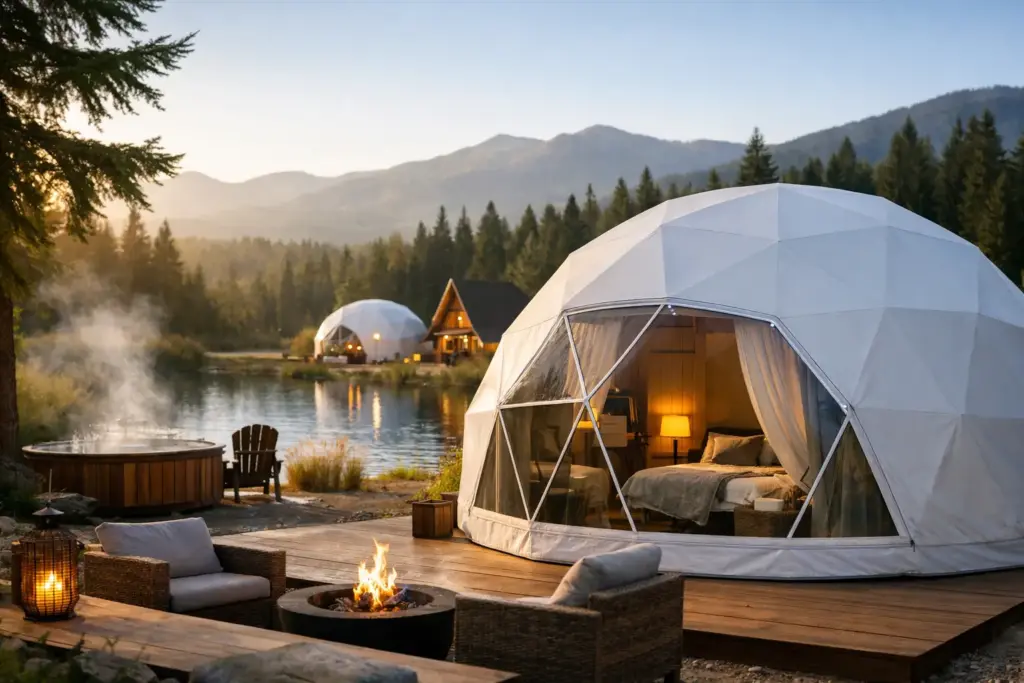
Peak season fills fast. Then the weather shifts, demand softens, and too many outdoor hospitality operators watch valuable land sit underused for months at a time. A year round glamping dome changes that equation by turning nature-based accommodation into a longer, steadier revenue stream – without the weight, timeline, and site disruption of conventional construction.
For resort owners, retreat operators, and land investors, that matters because seasonality is rarely just a calendar issue. It affects staffing, pricing power, occupancy planning, and the confidence to scale. If your property can only perform for part of the year, your return is capped from the start. The appeal of a dome built for all-season use is not simply that guests can stay in winter. It is that the asset keeps working harder across more dates, more guest segments, and more weather conditions.
Why a year-round glamping dome performs differently
Not every glamping structure deserves the phrase “year-round glamping dome.” In the hospitality market, year-round use is not a styling choice. It is the result of how the structure is designed, insulated, weatherproofed, ventilated, and operated.
A commercially viable dome must do more than look striking in photos. It has to maintain comfort through cold nights, summer heat, rain events, wind exposure, and shoulder-season fluctuations. It also needs to support the interior expectations of premium guests, whether that means climate control, private bathrooms, lounge space, or a bed placement that frames the landscape as part of the experience.
This is where domes have an advantage over many lightweight outdoor lodging options. The geodesic form is inherently strong, efficient in material use, and well suited to creating open, panoramic interiors. For operators, that translates into a structure that feels elevated to the guest while remaining practical to deploy and expand.
The business case behind all-season dome hospitality
A premium dome is not just a structure. It is a revenue-generating hospitality asset. That distinction matters when you are evaluating investment decisions across land use, guest demand, and operational overhead.
The strongest case for an all-season dome is simple: more sellable nights. If your accommodations can remain attractive through winter weekends, spring retreats, summer travel peaks, and fall foliage demand, you have far more opportunity to spread fixed costs and improve annual yield. A shorter path to revenue often matters just as much as headline nightly rates.
There is also pricing power in the experience itself. Guests are willing to pay more for stays that feel immersive, private, and visually distinctive. A well-positioned dome with premium finishes can command a higher perceived value than standard lodging because it offers something less common – comfort in nature without sacrificing design.
That said, revenue potential depends on market fit. A luxury wellness retreat in the mountains may perform well in snow season, while a warm-climate event venue may lean more heavily into shoulder-season bookings. The asset is flexible, but the pricing strategy, guest package, and occupancy model still need to match the location.
Season extension is often where ROI improves
For many operators, the most meaningful gains come from the months that used to be harder to sell. A year-round glamping dome can help capture holiday travel, off-site corporate retreats, wellness programming, and romantic getaway demand beyond the traditional summer window.
This creates a healthier business model than one built entirely around peak-season saturation. Instead of chasing profitability in a compressed period, you begin to build a property that earns over a longer arc of the year.
What makes a dome truly ready for year-round use
The phrase “year-round” is easy to claim and harder to deliver. Buyers should look past visuals and focus on performance.
Insulation is one of the first indicators. If the dome cannot help stabilize interior temperatures, heating and cooling costs rise while guest comfort becomes harder to manage. In cold markets, this is non-negotiable. In hot climates, thermal control matters just as much.
Weather resistance is equally important. Snow load, wind exposure, moisture protection, and durable exterior materials all affect how the structure performs over time. Hospitality owners are not buying for occasional leisure use. They are buying for repeat occupancy, operational consistency, and brand reputation.
Ventilation and energy efficiency also deserve careful attention. A dome that holds warmth in winter but struggles with airflow in summer can create guest complaints just as quickly as an underinsulated one. The best outcomes come from balancing insulation, ventilation, glazing choices, and mechanical systems according to the climate.
Interior planning plays a role too. If the dome is meant to compete at the premium end of the market, the layout must support a complete guest stay. Spaciousness, sightlines, bathroom integration, storage, and furnishings all shape whether the experience feels luxurious or improvised.
Guest experience is where the dome earns its premium
The commercial value of a dome is tied closely to how it feels the moment a guest enters. A strong structure may satisfy an operator, but memorable design is what drives word of mouth, reviews, repeat stays, and premium rates.
That is why panoramic architecture matters. The dome form creates a sense of openness that standard cabins often cannot match in the same footprint. With the right orientation, guests feel connected to the landscape from sunrise to stargazing. Optional transparent ceiling panels can heighten that effect, especially for properties built around dark skies, forest settings, or dramatic seasonal changes.
This is not just an aesthetic point. Experience-led lodging performs better when the architecture itself becomes part of the stay. Guests do not simply book a room. They book a feeling – privacy, wonder, calm, novelty, and comfort at once.
For retreat operators and upscale venues, this can extend beyond overnight lodging. A dome can also function as a wellness suite, meditation space, treatment setting, dining venue, or event environment. That flexibility gives owners more ways to build revenue from the same design language.
A smarter path than traditional construction
Many hospitality buyers are not choosing between a dome and nothing. They are choosing between a dome and a slower, more complex building process.
Traditional construction can make sense in some cases, especially for large permanent programs with long planning horizons. But for operators who want to test demand, add inventory quickly, or expand in phases, it often carries more friction than necessary. Longer timelines, deeper site disruption, and higher complexity can delay revenue and narrow flexibility.
A modular dome approach offers a different path. Installation is typically faster, site impact can be lower, and expansion can happen more strategically as demand grows. This is especially valuable for landowners who want to preserve the feel of the landscape while still building a premium hospitality offering.
There are trade-offs, of course. Not every site has the same access, utility setup, climate demands, or permitting environment. A successful project starts with realistic planning around those factors. But when the goal is to build your business with speed, design distinction, and scalable potential, domes are a compelling answer.
Choosing the right year-round glamping dome for your property
The best dome is the one that matches your business model, not just your mood board. A remote couple’s retreat may prioritize privacy and dramatic views. A multi-unit resort expansion may care more about repeatable deployment, operational efficiency, and phased growth. An event venue may need multipurpose flexibility across accommodations and gathering space.
Start with your revenue strategy. Are you aiming for high ADR with fewer units, or broader occupancy across a larger site plan? Are you serving romantic getaways, wellness travelers, family adventure guests, or corporate groups? The answers shape the dome size, interior program, amenities, and placement.
Then consider operations. Year-round use means your structure should support maintenance practicality as well as guest comfort. Durable materials, efficient climate systems, and straightforward installation all matter because they affect lifetime performance, not just launch-day appeal.
This is where working with a supplier that understands commercial hospitality makes a difference. StarWild Domes is positioned for operators who need more than a beautiful shell. They need a structure that supports premium guest experience, practical deployment, and long-term business growth across real-world climates in the US and Canada.
A year-round glamping dome is ultimately not about chasing a trend. It is about creating a place guests remember and a property that performs beyond one season. When luxury meets operational clarity, the landscape becomes more than scenery – it becomes part of a business built to last.