A dome can look extraordinary in a photo and still be the wrong investment for your property. For hospitality buyers, a geodesic dome buying guide is not really about shape alone. It is about choosing an asset that can elevate the guest experience, perform in your climate, and support the kind of revenue your land is capable of generating.
That distinction matters. A private backyard dome and a commercial glamping structure live in different worlds. If you are building for a resort, retreat, or event-driven venue, your decision has to account for operations, guest expectations, seasonality, and long-term return – not just visual appeal.
What a geodesic dome buying guide should help you decide
The right dome should do more than create interest. It should help you build your business. That means looking at the structure as part design statement, part lodging product, and part operational system.
For some properties, the dome is the hero accommodation that justifies premium nightly rates. For others, it works better as a wellness suite, spa space, dining venue, or event lounge. Before comparing materials or floor plans, get clear on the role the dome will play on your land. The answer affects size, insulation needs, utilities, guest flow, and how quickly the investment can pay back.
A dome intended for occasional events may not require the same thermal performance as a year-round luxury suite in a northern climate. A honeymoon unit designed around privacy and panoramic views will demand different window placement than a multi-use communal structure. In other words, the best option depends on the business model behind it.
Start with the guest experience you want to sell
In premium outdoor hospitality, design is not decoration. It is pricing power. Guests are willing to spend more for accommodations that feel immersive, distinctive, and elevated. A geodesic dome succeeds when it delivers that sense of sanctuary while still feeling polished, comfortable, and dependable.
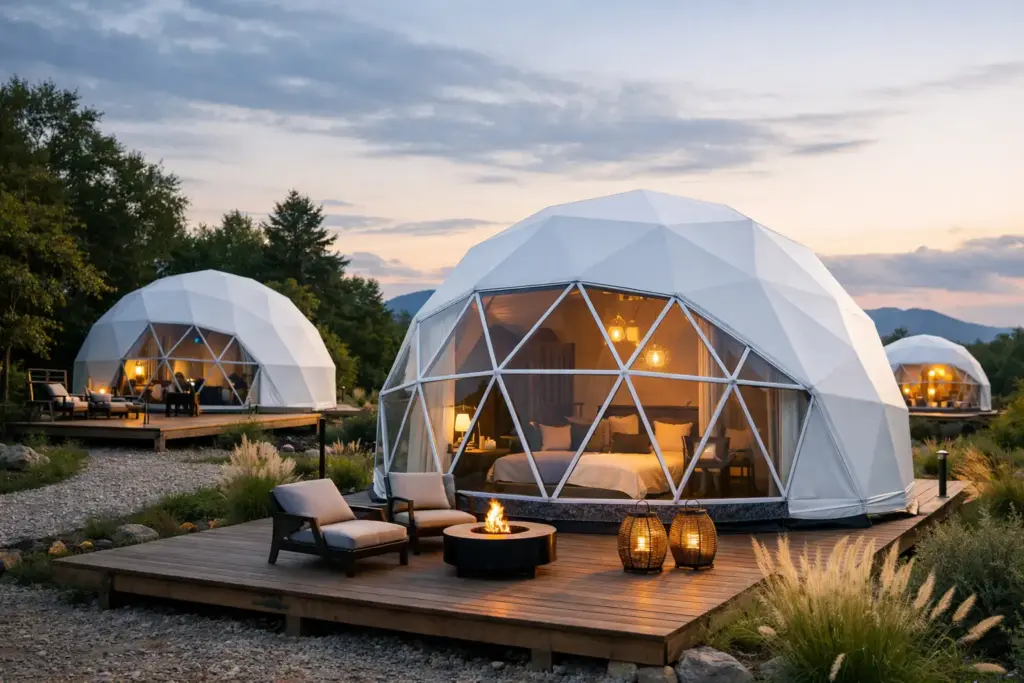
Think carefully about what your guests will remember the morning after check-in. It may be a framed forest view from bed, a transparent ceiling panel for stargazing, or the feeling of warmth and quiet during a winter stay. These details shape reviews, repeat bookings, and the ability to position your property above standard cabin or tent inventory.
This is where many buyers underestimate the importance of interior volume and natural light. A dome that appears generous from the outside can feel compromised inside if window placement, door configuration, or layout planning are not handled well. Hospitality-grade domes need to support furniture, circulation, luggage, and amenities without making the space feel crowded.
Durability matters more than first impressions
A beautiful structure that struggles through the weather is a liability. Commercial buyers should evaluate domes for real environmental performance, especially if the goal is year-round occupancy or deployment in exposed landscapes.
Frame strength, outer shell quality, insulation approach, moisture resistance, and weatherproofing all deserve close attention. Snow load and wind rating are not abstract technical details when a winter storm hits or your site sits in open terrain. The dome should be engineered for the demands of its region, not simply marketed as all-season.
Insulation is equally important because it affects both guest comfort and operating costs. If you plan to host guests in shoulder seasons or through winter, thermal performance will shape everything from HVAC sizing to utility bills to online reviews. A lower upfront price can become expensive quickly if the structure is difficult to heat, cool, or manage efficiently.
There is also a brand consideration here. Premium guests do not separate aesthetics from performance. If a dome looks luxurious but feels drafty, noisy, or damp, the experience falls apart.
The geodesic dome buying guide to size and layout
Size is often approached as a simple capacity question, but the more useful question is how the dome will function. A larger dome creates flexibility, but only if the layout supports it. A smaller dome can command strong rates if it feels intentional, open, and well-appointed.
For accommodation use, think beyond sleeping count. Consider where the bed faces, whether there is room for a lounge area, how the bathroom integrates, and whether guests can move through the space comfortably. If your property targets couples, the layout should feel intimate and scenic rather than packed with extra occupancy. If you are serving families or group retreats, storage and separation become more important.
For non-lodging applications, the same principle applies. Event domes need circulation. Wellness domes need calm acoustics and a sense of privacy. Dining domes need practical service access. The dome should fit the experience you are selling, not just the square footage available on paper.
Installation, site impact, and speed to market
One of the strongest advantages of a dome structure is the ability to expand hospitality inventory without the full burden of conventional construction. But installation is still a serious planning category, especially for operators balancing budgets, opening timelines, and land constraints.
Ask how the dome interacts with the site. Some projects require minimal disruption, which is valuable for wooded settings, sensitive landscapes, or active hospitality properties that need to keep operating during expansion. Modular systems can also reduce installation complexity and accelerate launch timelines, which matters when every delayed month pushes revenue further out.
This is also where relocation flexibility can become a strategic advantage. Not every buyer needs it, but for seasonal concepts, evolving master plans, or properties testing a new market segment, the ability to reposition or scale with less permanent disruption can materially reduce risk.
Speed matters, but not at the expense of planning. Site access, foundation requirements, utility runs, permitting considerations, and interior fit-out all influence the real timeline. A supplier that understands hospitality projects can help you see the full path, not just the assembly window.
Evaluate the dome as a business asset
The strongest purchases are not driven by novelty. They are driven by revenue logic. A dome should help you create a differentiated accommodation category with strong ADR potential, broader seasonal occupancy, and a guest experience that supports premium positioning.
That means looking closely at total cost, not just purchase price. Include delivery, installation, site preparation, utilities, furnishing, climate control, and any amenities required to achieve your target rate. A cheaper dome is not necessarily the better investment if it limits pricing, shortens the booking season, or raises maintenance demands.
This is where upscale operators often find the value of a premium structure. Better insulation, more durable materials, and refined design details can contribute to stronger guest satisfaction and more resilient margins over time. The goal is not simply to spend less. The goal is to create an asset that earns well.
If you plan to scale, think one step further. Can the dome model support a multi-unit rollout with design consistency across the property? Can it be integrated into a phased growth plan? Hospitality buyers benefit from solutions that work for one flagship unit and still make sense at five or ten.
Questions worth asking before you buy
The best buying process is usually shaped by a few honest questions. Is this dome designed for hospitality-grade use or adapted from a consumer product? Will it perform in your specific climate? Can it support the level of comfort your guests expect at your target nightly rate?
You should also ask what happens after purchase. Does the supplier understand commercial deployment, or only the structure itself? Can they support installation strategy, scalability, and project execution? For serious operators, that partnership matters almost as much as the dome.
StarWild Domes is built around that commercial reality – where luxury meets nature but never at the expense of operational performance.
Choose for the stay you want to be known for
A dome is rarely just another structure on a hospitality property. Done well, it becomes the stay guests talk about first and search for by name. Done poorly, it becomes an expensive lesson in buying for appearance instead of experience.
The right choice balances visual impact with weather performance, guest comfort with installation practicality, and aspiration with ROI. If you approach the purchase with those priorities in mind, you are not just buying a dome. You are shaping a revenue-generating destination that gives people a reason to book, return, and remember your property long after they leave.