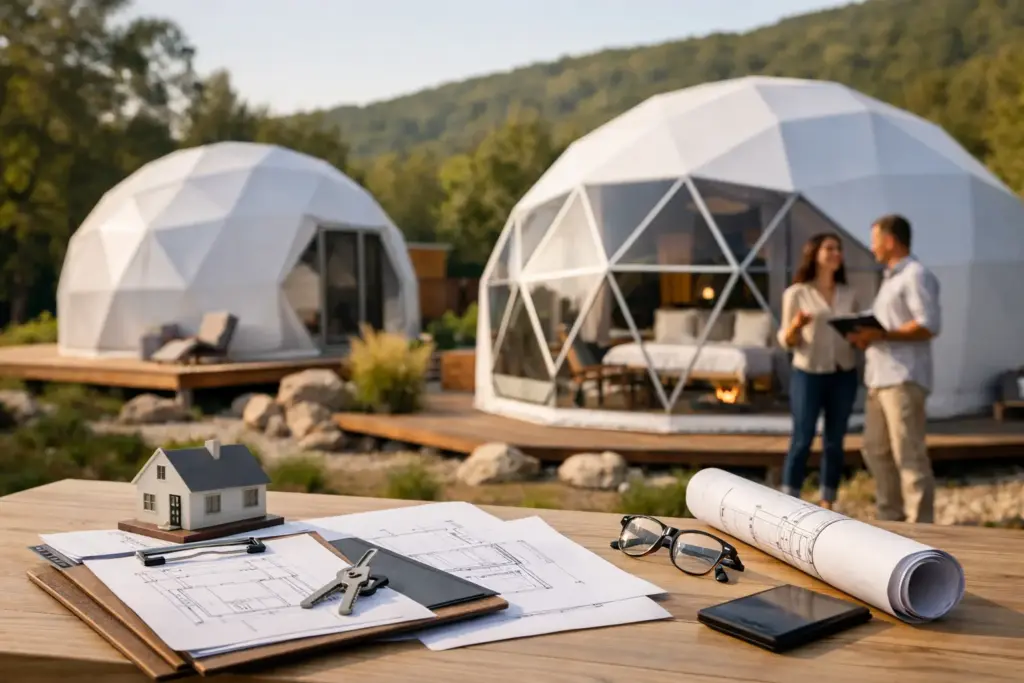
A panoramic dome beneath a clear night sky may feel far removed from conventional construction. To a county planner, however, the first question is practical: what is being built, where will it sit, and how will guests use it? Do dome resorts need permits? In most cases, yes. The exact approvals vary by location and project scope, but hospitality domes are rarely treated as a simple backyard accessory once they are rented to overnight guests.
For resort owners and landowners, permitting is not a reason to pause an exceptional concept. It is the early-stage work that protects it. A thoughtful approvals strategy can help turn a beautiful site into a credible, year-round hospitality asset with a clearer path to opening day, stronger guest confidence, and long-term revenue potential.
Do Dome Resorts Need Permits for Guest Stays?
A dome intended for commercial overnight accommodation may require zoning review, building approval, site-related permits, business or lodging approvals, or a combination of these, depending on the jurisdiction and proposed use.
How a dome structure—and the hospitality use associated with it—is classified varies by jurisdiction. Local authorities may consider factors such as whether the installation is permanent or temporary, its foundation or anchoring system, occupancy, utilities, intended use, and the property’s zoning. The classification of the structure and the permitted use of the land can both affect which approvals are required.
A dome resort project can involve approvals for the dome foundation or anchoring system, electrical service, plumbing, septic or sewer connections, fire safety, access roads, parking, stormwater management, signage, and food or wellness amenities. If the property is in a floodplain, wildfire interface area, shoreline district, historic area, or environmentally sensitive location, additional reviews may apply.
The key distinction is this: a dome’s construction method or potentially lighter site footprint does not automatically remove the need for permits or approvals. The structure itself may be relatively efficient to install once the site is ready, but site preparation, utilities, inspections, permitting, and hospitality-related requirements can significantly affect the overall project timeline.
Permitting, zoning, building code, and hospitality requirements vary significantly by location. StarWild Domes can provide product information and documentation relevant to your project, but property owners and developers should confirm applicable requirements with their local planning, building, and other regulatory authorities before proceeding.
Start With Zoning Before Selecting a Dome Site
One of the most costly permitting mistakes can be committing to a site plan before confirming that short-term lodging or the proposed hospitality use is permitted on the property.
Begin by confirming the property’s zoning designation and the permitted, conditional, or discretionary uses that may apply. Some districts allow resorts, cabins, campgrounds, or tourist accommodations by right. Others require a conditional use permit, special exception, planned development review, or rezoning. Rural land is not automatically open to commercial glamping, and a scenic parcel can still have meaningful restrictions on density, access, utilities, and operating seasons.
This first conversation should happen with the local planning or zoning department, not only with a general contractor or a dome supplier. Ask how the jurisdiction classifies overnight glamping accommodations, whether multiple units are permitted, and whether there are rules governing occupancy, minimum unit spacing, quiet hours, parking, or on-site management.
It also helps to present the project clearly. Describe the number of domes, whether they are seasonal or year-round, the guest capacity, the planned utilities, common spaces, and the access route. A vague inquiry about “putting up a tent” may produce an answer that does not apply to a premium, weatherproof lodging unit with heating, bathrooms, and commercial guest use.
The Permit Path Changes With Your Business Model
A proposed dome at an existing hospitality property may sometimes fit within an established or previously approved hospitality use, although additional building, site, or operational approvals may still be required. A new destination property with ten or twenty units is likely to receive a more detailed review, particularly when it adds parking, roads, water demand, wastewater load, or event programming.
Wellness retreats and event-oriented properties have additional considerations. A sauna, commercial kitchen, gathering pavilion, yoga platform, bar service, or wedding venue can each trigger separate review requirements. These additions can elevate the guest experience and revenue opportunity, but they should be included in the project and approvals planning from the beginning rather than added after construction.
Approvals for a Commercial Dome Resort
No two jurisdictions use identical terminology, but a commercial glamping development often touches several approval categories:
- Zoning or land-use approval depending on how the proposed hospitality use is classified locally.
- Building permits potentially covering the dome structure, foundation or anchoring system, decks, and other structural components.
- Electrical, plumbing, and mechanical permits where applicable to utilities, HVAC, bathrooms, water heating, and related systems.
- Water and wastewater approval which may involve septic, well, sewer, or other requirements depending on the property.
- Fire and life-safety review requirements may address matters such as emergency access, egress, alarms, extinguishers, and wildfire considerations.
- Site and environmental permits potentially involving grading, drainage, wetlands, vegetation removal, driveways, parking, or other site work.
Some smaller projects may need only a portion of this list. Larger hospitality developments may also require engineered drawings, traffic or access studies, public hearings, and review by municipal, county, regional, provincial, state, or other authorities. Treat the list as a planning lens, not a substitute for local guidance.
Why Structure Details Still Matter
A premium dome is not simply an aesthetic choice. Its engineering, weather resistance, insulation strategy, anchoring approach, and intended occupancy all shape the permitting conversation.
Building officials may request structural documentation for wind, snow, and seismic conditions specific to the site. They may also review flame-spread characteristics, emergency exits, ventilation, energy performance, and the connection between the dome and its platform or foundation. Requirements can be especially demanding in regions with high snow loads, coastal winds, extreme temperatures, or wildfire exposure.
This is where a commercial-grade dome partner can add real value. Clear product specifications and installation information give your architect, engineer, or contractor a more reliable starting point. StarWild Domes focuses on dome solutions for outdoor hospitality applications, where weather protection, year-round comfort, durability, and guest experience all need to be considered together.
Still, documentation does not replace local design review. A dome that performs exceptionally in one climate may require different engineering or utility decisions in another. The best approach is to match the structure, foundation, and services to the local code environment before finalizing procurement.
A Smarter Way to Prepare Before You Apply
Permitting moves more efficiently when the project team is aligned early. Bring together your site plan, utility strategy, dome specifications, guest operations plan, and budget before submitting anything formal. A complete, consistent proposal can also make it easier for planning and building authorities to understand the intended use, site layout, and scope of the project.
A preliminary site review can reveal issues that affect both cost and guest experience. For example, moving a proposed dome cluster away from wetlands, drainage features, or other environmentally sensitive areas may simplify site planning while also improving privacy.
Thoughtful utility routing may also reduce infrastructure complexity and help preserve the natural character of the property. Designing service access discreetly preserves the sense of sanctuary guests expect without compromising operations or emergency response.
Engage local professionals when the project warrants it. Depending on the site, that may include a land-use attorney, civil engineer, architect, surveyor, septic designer, or fire protection consultant. Their role is not to overcomplicate the project. It is to identify potential issues early and help reduce the risk of redesigns, approval delays, or plans that do not reflect how the property will actually operate.
It is also wise to build time into the launch schedule. It is also wise to allow adequate time for approvals in the project schedule. Review timelines vary significantly by jurisdiction, project complexity, and the type of approvals required. Some applications may be relatively straightforward, while projects involving discretionary land-use approvals, public consultation, environmental review, or other agencies can require considerably more time. Neighbor outreach may be valuable for projects near residential areas, especially if traffic, lighting, events, or short-term rental concerns are likely to surface during review.
Permitting Is Part of Building a Durable Hospitality Asset
The strongest dome resorts are not created by treating permitting as a box to check after the vision is set. They are created when the vision and the approval strategy evolve together.
When zoning, infrastructure, code compliance, and guest experience are considered at the same table, a dome resort is positioned to do more than open beautifully. It can operate with confidence, expand with intention, and give guests the rare feeling that luxury and nature were always meant to share the same horizon.
Permitting, zoning, building code, and hospitality requirements vary significantly by location. StarWild Domes can provide product information and documentation relevant to your project, but property owners and developers should confirm applicable requirements with their local planning, building, and other regulatory authorities before proceeding.