A guest who pays a premium to sleep beneath the stars would rather not feel as if they are camping with better linens. They want privacy, comfort, atmosphere, and a story worth sharing. That expectation is shaping outdoor hospitality trends for 2026, creating a clear opportunity for operators who treat nature-based lodging as a serious hospitality asset rather than a seasonal novelty.
For resort owners, landowners, and retreat developers, the strongest opportunities are not found in adding more units as quickly as possible. They come from creating distinctive stays that command higher rates, operate across more of the calendar, and fit a long-term vision for the property.
Outdoor Hospitality Trends 2026 Shift Toward Quality
The outdoor lodging market is maturing. Guests still want forest views, quiet mornings, and a sense of escape, but they increasingly expect the standards of a boutique hotel. That means climate control, thoughtful lighting, comfortable beds, private bathrooms where feasible, and architecture that feels intentional from the moment they arrive.
This trend is changing the investment conversation. A basic cabin, tent, or converted trailer may offer a lower entry cost, but it can also limit rate potential and create a guest experience that is difficult to differentiate. Premium structures with panoramic views, insulated envelopes, and refined interiors can support a more compelling nightly rate because the accommodation itself becomes part of the destination.
The key is not luxury for its own sake. It is a design decision tied to commercial performance. When guests perceive real value, operators have more flexibility to price around weekends, holidays, private packages, and shoulder-season demand without relying on discounting.
Four Movements Defining the Market
All-season revenue is becoming the benchmark.
Seasonality has long been one of the biggest constraints in outdoor hospitality. In 2026, operators are planning for winter stays, rainy weekends, and summer heat from the first stage of site selection and unit design.
All-season capability depends on more than adding a heater. Insulation, weatherproof construction, efficient climate systems, proper foundations, and reliable access all shape whether a unit can deliver a comfortable stay when conditions change. In colder parts of the United States and Canada, such capability can be the difference between a business that closes for months and one that builds revenue throughout the year.
There is a trade-off. Year-round operation requires more upfront planning and may increase utility and maintenance considerations. Yet for properties with consistent demand, spreading fixed costs across a longer booking season can materially improve the economics of each unit.
Architecture is part of the guest experience.
The next generation of outdoor stays will not feature generic accommodation. Guests are choosing places with a visual perspective: curved structures in woodland clearings, stargazing ceilings, layered decks, outdoor soaking areas, and interiors that frame the landscape rather than compete with it.
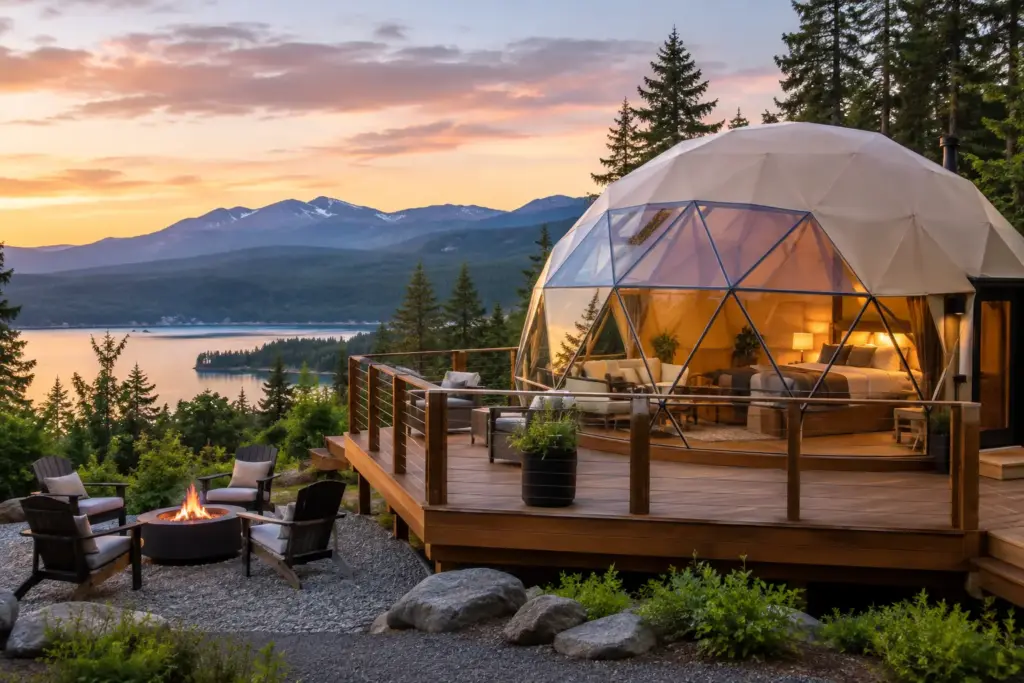
Geodesic domes fit naturally within this movement because their form feels both sheltering and immersive. A panoramic window can turn a mountain ridge, lakeshore, or quiet stand of trees into the focal point of the room. Optional transparent ceiling panels extend the experience after dark, especially where clear skies are a genuine part of the property’s appeal.
Still, visual impact should serve the site. A dome placed too close to another unit, a parking area, or a busy trail loses the privacy that makes the experience feel exclusive. Successful projects protect sightlines, manage sound, and give each guest space to feel removed from the ordinary.
Wellness is moving outdoors, with more intention.
Wellness travel is no longer limited to spa menus and yoga studios. Guests are looking for environments that help them slow down: quiet accommodations, natural light, restorative sleep, cold plunges, sauna rituals, guided walks, and spaces for reflection.
For retreat operators, this trend creates a chance to build packages rather than simply sell overnight stays. A well-designed dome can function as a private sanctuary, while larger structures can support movement classes, meditation sessions, dining, workshops, or small gatherings. The same property can then serve different revenue streams across the year.
The strongest wellness concepts remain grounded in authenticity. A sauna or wellness add-on works when it suits the landscape and the guest journey. Adding every trend at once can dilute the sense of place and complicate operations.
Flexible development is gaining strategic value.
Traditional construction can demand long timelines, extensive disruption, and a level of commitment that feels risky when a concept is still being proven. Modular and adaptable lodging offers a different path: launch with a focused number of units, measure demand, refine the guest experience, and expand with more confidence.
This flexibility is relevant for landowners testing a new hospitality business, as well as established resorts adding a premium lodging category. Structures that can be installed with minimal site disruption and relocated if the master plan evolves provide optionality that permanent construction often cannot.
Flexibility does not eliminate the need for diligence. Zoning, permitting, utilities, road access, drainage, fire requirements, and accessibility should be considered before a unit is ordered. The most attractive concept on paper can lose momentum if site infrastructure has been underestimated.
What Guests Will Pay More For
One feature rarely drives premium rates. They come from the combined sense that a stay is private, beautiful, comfortable, and effortless. In practice, guests respond to a well-considered location, a memorable view, a polished interior, dependable heating and cooling, and amenities that make the stay feel complete.
They also value frictionless hospitality. Clear arrival instructions, intuitive parking, seamless check-in, reliable Wi-Fi when promised, and responsive support do not create the headline image for a booking page. They do, however, shape reviews, referrals, and repeat business.
Operators should be careful not to overbuild every unit. A remote romantic escape may justify a private hot tub and outdoor shower, while a family-oriented resort may see better returns from larger layouts, accessible paths, and shared gathering areas. The right amenity mix depends on the guest segment, competitive set, local climate, and achievable rate.
Build a Portfolio, Not Just a Collection of Units
The most resilient outdoor hospitality properties are designed as connected experiences. Lodging, arrival, paths, lighting, gathering spaces, food and beverage options, and programming should all reinforce the same promise.
A property with several domes, for example, may create different stay types without losing visual cohesion. One unit can be positioned for couples seeking seclusion, another for wellness-focused guests, and a larger dome for private dinners or small events. This creates more reasons to book while allowing the operator to serve different demand patterns.
Scalability is especially valuable when the first phase performs well. Rather than committing immediately to a large buildout, a phased plan can establish operating data: average daily rate, occupancy by season, guest acquisition cost, cleaning time, maintenance needs, and package uptake. Those numbers provide a stronger foundation for expansion than assumptions alone.
StarWild Domes is built around this balance of elevated guest experience and practical growth, helping hospitality operators create durable, energy-efficient spaces that can support both a compelling brand and a disciplined development strategy.
The Competitive Edge Is a Feeling, Backed by Operations
Many outdoor hospitality projects can attract attention at launch. Fewer can sustain premium pricing once the initial novelty fades. The difference is operational discipline behind the atmosphere: structures that withstand weather, interiors that remain comfortable, service standards that match the rate, and a property plan that makes expansion manageable.
As outdoor hospitality trends in 2026 continue to favor immersive, all-season, design-led stays, the winning properties will be the ones that make guests feel they have found somewhere rare without making the business difficult to run. Start with the experience you want people to remember, then build the infrastructure, accommodation, and operating model that can deliver it every day.