
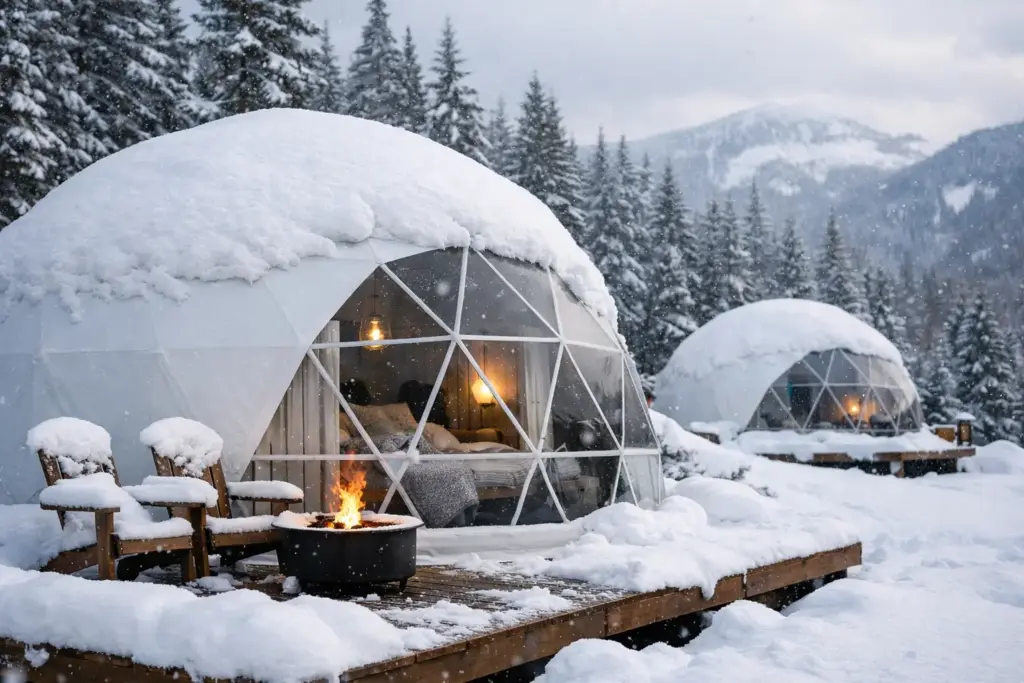
A light snowfall looks magical on a dome. Three feet of wet snow, wind-driven drifts, and a fully booked winter weekend are where the real question begins: can glamping domes handle snow in a way that protects guests, operations, and long-term returns?
The short answer is yes – but only when the dome is engineered, installed, and managed for true winter performance. Snow is not simply a weather event for outdoor hospitality operators. It is a structural, operational, and guest-experience consideration. If you are planning a revenue-generating dome property in the United States or Canada, the better question is not whether domes can handle snow, but what kind of dome can handle your specific site conditions.
Can glamping domes handle snow in real winter conditions?
A well-designed geodesic dome is naturally suited to snow better than many conventional shapes. Its curved geometry helps distribute loads across the frame instead of concentrating pressure at one flat point. That matters in winter, because snow load is rarely uniform. Wind can create drifts, temperature swings can turn powder into heavy slush, and ice can add weight quickly.
That said, not all domes are created for four-season commercial use. A seasonal event dome or lightweight recreational structure may perform very differently from a hospitality-grade dome built for snow country. For resort owners, retreat operators, and land developers, that distinction is critical. Winter weather is where premium design meets operational reality.
If your property is in the Rockies, the Northeast, the Upper Midwest, or Canada, you need a dome system with a frame, cover, insulation strategy, anchoring method, and installation plan that account for local snow load requirements. The dome itself is only one part of the answer.
What determines whether a dome can handle snow?
Snow performance comes down to engineering, not aesthetics. A dome may look substantial, but visual appeal tells you very little about winter readiness.
Structural frame strength
The frame carries the load. In snow-prone regions, the diameter of the steel members, connector quality, corrosion resistance, and overall engineering standard all matter. A premium geodesic structure distributes force efficiently, but only if the materials and connection points are designed for sustained winter stress.
For commercial operators, this is not a detail to gloss over. Your structure needs to support occupancy, heating systems, interior finishes, and snow load at the same time. A stronger frame supports both safety and long-term asset performance.
Site-specific snow load ratings
Snow load is not one universal number. It varies by state, province, elevation, exposure, and local code. Mountain regions often face dramatically different load requirements than lower-elevation locations just a short drive away.
This is where many buyers oversimplify the decision. They ask whether a dome can handle snow, when they should be asking whether a specific dome model is rated for the expected snow load on their exact site. That is a much more useful business question, because it affects permitting, insurance, maintenance planning, and risk exposure.
Dome shape and snow shedding
One of the advantages of a dome is that snow tends to slide off more readily than it does on flat or shallow-pitched surfaces. The geometry helps reduce buildup, especially when combined with interior heat that warms the envelope.
Still, shedding is not guaranteed in every storm. Wet, sticky snow can cling. Wind can pile snow unevenly. Freeze-thaw cycles can create ice layers that behave differently than fresh powder. A dome can encourage snow movement, but operators should never assume it eliminates snow management entirely.
Membrane and insulation system
The outer shell and insulation package affect both comfort and snow behavior. A well-insulated dome retains heat more efficiently, supports year-round occupancy, and can reduce interior heat loss that might otherwise lead to uneven condensation or cold spots.
For guest-facing hospitality, insulation does more than improve winter livability. It protects the premium experience. Nobody is paying luxury nightly rates to sleep in a structure that feels drafty, noisy, or vulnerable during a storm.
Snow handling is also an operations question
For serious hospitality projects, winter readiness is not only about surviving a storm. It is about maintaining a smooth guest experience while protecting revenue.
A snow-capable dome should fit into an operating model that includes access routes, platform design, heating strategy, ventilation, power reliability, and snow removal around the unit. Even if the dome itself is structurally sound, the guest experience can suffer if walkways freeze, entrances drift shut, or condensation becomes difficult to manage.
This is why year-round dome hospitality works best when the structure is part of a coordinated site plan. Luxury in winter is not accidental. It comes from thoughtful integration between the dome, the land, and the operator’s service standards.
Common misconceptions about domes and snow
One misconception is that soft-sided or membrane-covered structures are automatically weaker than traditional buildings. In reality, many engineered dome systems are highly durable and designed for demanding climates. The issue is not whether a structure looks unconventional. The issue is whether it has been specified for commercial, all-season use.
Another misconception is that if a dome can stand in cold weather, it is winter-ready. Cold tolerance and snow-load capacity are not the same thing. A structure may be comfortable in low temperatures but still require very different engineering for heavy snow regions.
A third misconception is that snow load is the only winter factor that matters. Wind, moisture, ice accumulation, condensation control, and HVAC performance all shape how successful a winter dome operation will be. Operators who think beyond the structure itself usually create stronger guest satisfaction and fewer seasonal disruptions.
How to evaluate a snow-ready glamping dome for your property
If you are comparing dome suppliers, the smartest approach is to evaluate winter capability as part of the broader investment case.
Start with structural engineering and ask for site-appropriate load information. A credible supplier should be able to speak clearly about snow performance, frame specifications, and regional suitability. Vague assurances are not enough for a commercial lodging asset.
Then look at insulation, heating compatibility, and year-round weatherproofing. A dome that can technically stand through winter but struggles to maintain comfort may still underperform as a hospitality product. Guests remember how a space feels, not just how it was engineered.
Installation quality also matters. Even the best dome design can be compromised by poor siting, weak anchoring, or an inadequate foundation platform. Snow events expose weak points quickly. For operators building a premium brand, consistency is everything.
Finally, consider how winter use supports revenue. In many markets, snow is not a drawback. It is part of the appeal. A warm, panoramic dome in a snowy landscape can command premium nightly rates, extend your season, and help differentiate your property from standard cabins or hotels. When the structure is built for winter, snow becomes part of the experience you sell.
Can glamping domes handle snow and still feel luxurious?
Absolutely – if luxury has been designed into the structure from the beginning. Winter guests want more than shelter. They want warmth, quiet, visual drama, and confidence that the environment outside enhances the stay rather than threatening it.
That is where premium dome hospitality stands apart. The right dome can frame a snowfall as part of the experience: a protected retreat with panoramic views, efficient climate control, and a sense of seclusion that conventional rooms often cannot match. For upscale resorts, wellness retreats, and private nature stays, this combination is powerful.
From a business perspective, winter-capable domes can also strengthen the value of your land. They allow you to activate shoulder seasons, build destination appeal, and create accommodations that feel both immersive and operationally practical. At StarWild Domes, that balance between beauty and performance is central to how outdoor hospitality becomes a durable business model.
The real answer for investors and operators
So, can glamping domes handle snow? Yes, when they are engineered for the load, matched to the site, and supported by an operational plan that respects winter conditions.
For hospitality investors and landowners, the more useful takeaway is this: snow should not automatically remove domes from consideration. It should sharpen your standards. A four-season dome is not just a structure. It is a revenue-producing asset that needs to perform under pressure while still delivering the kind of stay guests are excited to book.
If your property sits in a snow market, winter can become one of your strongest selling seasons. The key is choosing a dome system that treats weather as part of the business case, not as an afterthought. Build for the climate you actually have, and the view outside becomes part of the return.