A beautiful site can only carry a hospitality concept so far. The structure you place on that land shapes everything that follows – your nightly rate, your season length, your operating costs, and the kind of guest experience people remember well enough to book again.
That is why geodesic domes vs. yurts is not just a design conversation. For resort owners, retreat operators, and land developers, it is a business decision tied directly to revenue potential, brand positioning, and how efficiently you can scale an outdoor lodging concept.
Geodesic domes vs. yurts: What sets them apart?
At a glance, both options promise immersive stays that feel closer to nature than a standard cabin or hotel room. Both can work for glamping, retreats, and event-driven hospitality. But they create very different impressions in the market.
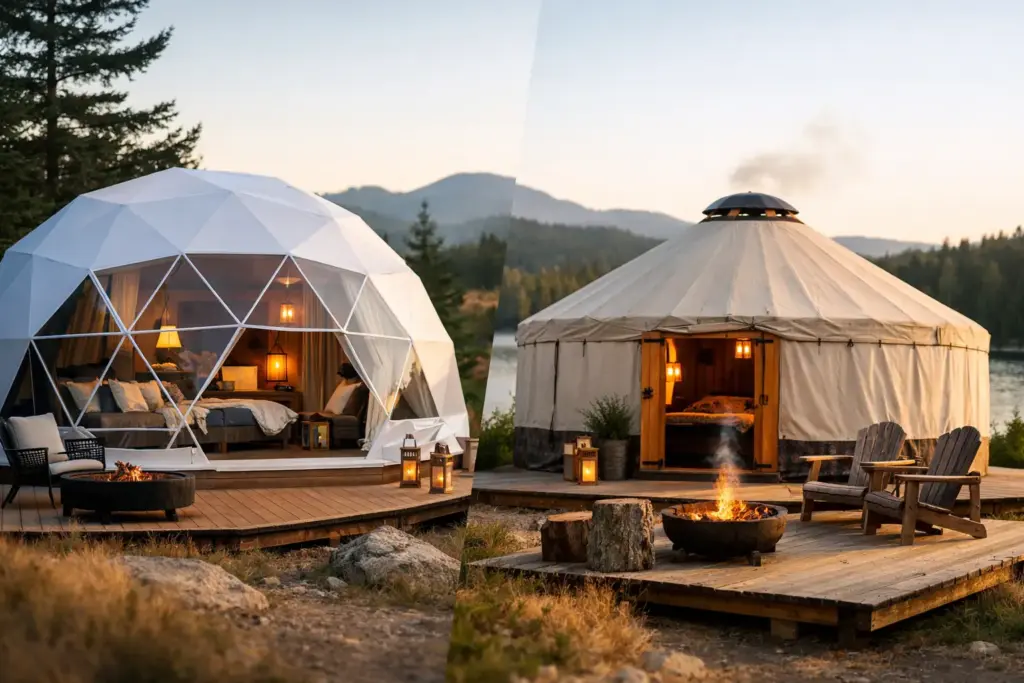
A yurt carries a softer, more traditional identity. Its circular form, fabric walls, and tent-like heritage appeal to operators who want a rustic, grounded atmosphere. For some properties, that is the right fit. It can feel relaxed, approachable, and intentionally simple.
A geodesic dome communicates something else entirely. It feels architectural, panoramic, and elevated. It signals a premium outdoor stay rather than a temporary shelter. For operators targeting higher ADRs, luxury-minded travelers, or experience-led bookings, that difference matters more than many realize.
The real question is not which structure is more charming in theory. It is which one supports the business you want to build.
Guest perception drives pricing power
In outdoor hospitality, appearance is part of the product. Guests often book with their eyes first, especially on visual platforms where one standout structure can define an entire property.
Yurts tend to attract guests looking for a casual glamping experience. That can be a strength if your concept is intentionally rustic and price-accessible. But if your goal is to create a high-design retreat, wellness destination, or upscale resort extension, yurts can sometimes place a ceiling on perceived value.
Geodesic domes usually offer stronger premium positioning. Their sculptural profile photographs beautifully, the interiors feel more open, and optional transparent panels create a powerful connection to the surrounding landscape. That combination supports a more distinctive guest experience – one that often justifies stronger nightly rates and more social sharing.
For hospitality operators, this is where luxury meets nature in a commercially meaningful way. When the structure itself becomes part of the attraction, you are not just adding a room. You are creating a revenue-generating experience.
Durability and all-season performance
This is where the comparison becomes especially practical. Many operators enter outdoor hospitality with a vision centered on guest experience, then discover that weather, maintenance, and seasonal limitations have a major impact on margins.
Yurts can perform well in mild climates and shorter operating windows, but their materials and overall construction often require more vigilance over time. Fabric components, moisture exposure, and insulation limitations can all affect comfort and lifespan depending on the quality of the build and the local environment.
Geodesic domes are often better suited to operators who need durability as part of the investment case. Their engineered shape distributes wind and snow loads efficiently, and premium models are built with weather-resistant exteriors, insulation options, and year-round usability in mind. In regions with heavy rain, snow, cold winters, or intense summer sun, that resilience is not a luxury feature. It is operational protection.
If your property is in a four-season market, the structure must support a longer booking calendar without constant compromise. A dome built for all-weather use gives you a stronger shot at extending occupancy beyond peak months, which can materially improve ROI.
Geodesic domes vs yurts for operations and maintenance
Every hospitality asset looks attractive on launch day. The better question is how it performs after dozens or hundreds of guest stays.
Yurts can require more frequent attention to preserve their appearance and weather resistance. Depending on the model, operators may need to monitor fabric wear, sealing, condensation management, and insulation performance more closely. None of that makes yurts unworkable, but it does add operational texture that should be priced into the decision.
Geodesic domes, particularly premium commercial-grade models, are generally designed with longer-term use in mind. Their materials are often more durable, their envelope more protective, and their maintenance profile more aligned with serious hospitality deployment. For owners managing multiple units, this matters even more. Small maintenance differences become large cost differences at scale.
The most investable structure is not always the one with the lowest initial price. It is often the one that protects uptime, reduces recurring issues, and helps your team operate with fewer interruptions.
Interior experience and layout flexibility
The interior feel of a structure shapes guest satisfaction as much as the exterior profile. A stay can photograph well online and still disappoint in person if it feels cramped, dim, or difficult to furnish.
Yurts offer a warm, circular interior, but their wall geometry can limit how easily you integrate larger beds, soaking tubs, lounge seating, or layered hospitality finishes. That may be perfectly acceptable for simpler accommodations, yet it can be restrictive when you are trying to create a luxury suite feeling.
Geodesic domes typically create a greater sense of volume and visual drama. Higher ceilings, panoramic lines, and natural light contribute to a more elevated atmosphere. This gives operators more room to build a premium interior story – from spa-inspired retreats to romantic couple stays to event-adjacent lodging designed for memorable weekends.
That flexibility also helps with brand differentiation. If your business depends on commanding premium rates, every detail of the guest environment should reinforce that positioning.
Installation, site impact, and expansion
For many developers and landowners, speed matters almost as much as design. Traditional construction can be slow, disruptive, and expensive to scale. Both yurts and domes can offer faster deployment than permanent buildings, but the right fit depends on your long-term plan.
Yurts may work well for lower-complexity concepts or operators testing a smaller-format glamping idea. They can offer an approachable path into outdoor lodging when the goal is simplicity over polish.
Geodesic domes are often a stronger match for operators building a more ambitious hospitality model. Modular deployment, relatively efficient installation, and low site disruption support faster project execution without sacrificing guest appeal. That is especially valuable for properties that want to add inventory in phases, preserve the natural character of the land, or expand across multiple units over time.
This scalability is where a premium dome structure becomes more than a design choice. It becomes a platform for growth.
Which option delivers stronger ROI potential?
ROI depends on more than acquisition cost. It depends on pricing power, occupancy, maintenance demands, season length, and how strongly the structure supports your brand.
A yurt can be a sensible option for operators pursuing a rustic experience in a temperate market, particularly if the business model is lower-rate and seasonal by design. If your guests value simplicity and your operational strategy matches that reality, a yurt may serve the concept well.
A geodesic dome is often the stronger commercial play when the goal is upscale positioning, all-season revenue, and memorable accommodations that stand apart in a crowded market. The ability to deliver a more premium aesthetic, better climate resilience, and broader guest appeal can create stronger long-term returns even if the upfront investment is higher.
For many hospitality entrepreneurs, the smartest question is not, “Which structure costs less today?” It is, “Which structure gives my property the best chance to earn more, operate longer, and stand out faster?”
The right choice depends on the business you are building
There is no universal winner between yurts and domes. There is only alignment.
If your vision is intimate, rustic, and intentionally simple, a yurt may fit the story. If your vision is design-forward, four-season, and built around premium guest experiences, a geodesic dome will usually offer a stronger foundation.
That distinction matters because guests do not simply book square footage. They book emotion, atmosphere, and expectation. And investors do not measure structures by charm alone. They measure performance.
For operators who want to build a business around elevated outdoor stays, the structure should do more than shelter guests. It should strengthen your brand, support operational efficiency, and create the kind of experience that keeps your property talked about long after checkout. That is the standard premium hospitality should meet.