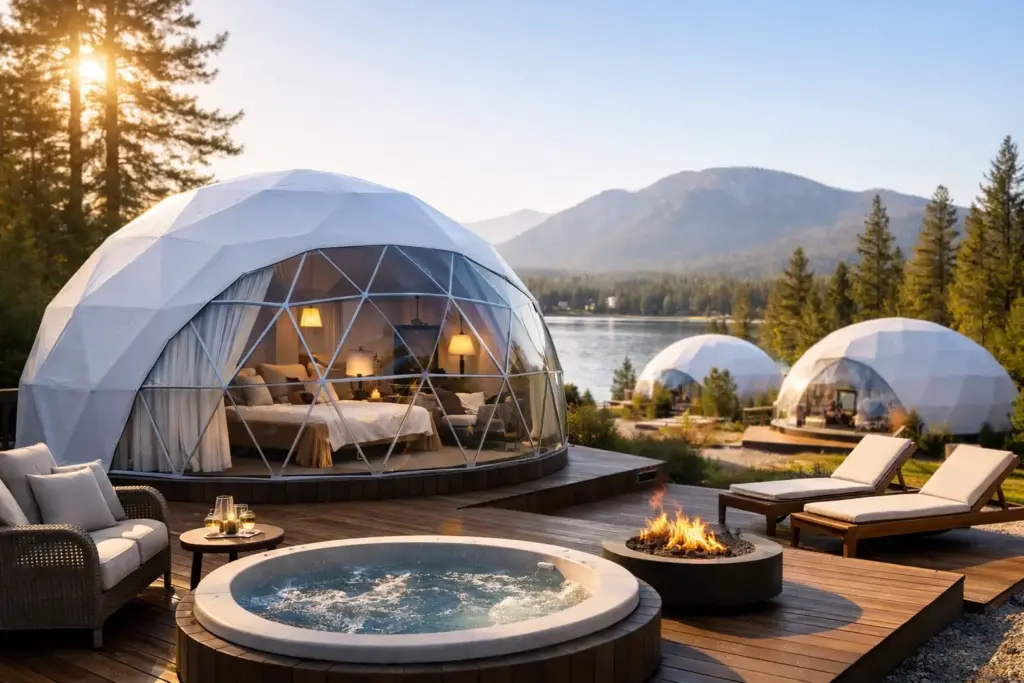
A dome that photographs beautifully at sunset but struggles through winter, overheats in July, or slows down your launch is not a luxury asset. It is an expensive lesson. The right luxury dome-buying guide starts with a simple shift in perspective: you are not just selecting a structure; you are choosing a guest experience, an operating model, and a revenue strategy.
For resort owners, retreat operators, and land developers, that distinction matters. A luxury dome should elevate the emotional appeal of staying close to nature while also performing like a serious hospitality investment. Design matters, but so do insulation values, installation logistics, maintenance demands, and the ability to scale from one unit to several without reinventing the project each time.
What a luxury dome buying guide should actually help you decide
Many buyers begin with visuals. Panoramic windows, transparent roof panels, elegant interiors, and a dramatic profile all have obvious appeal. Guests book with their eyes first, and distinctive design can justify premium nightly rates. But appearance alone does not tell you whether a dome will hold up through snow load, support year-round occupancy, or fit the realities of your site.
A better way to evaluate domes is to look at them through three lenses at once: guest desirability, operational practicality, and long-term return. If one of those is weak, the investment becomes harder to defend. A stunning structure that is expensive to heat chips away at margin. A durable shell with no memorable guest appeal leaves revenue on the table. The strongest projects balance all three.
Luxury dome buying guide: start with the business model
Before comparing sizes, materials, or add-ons, get clear on how the dome will function within your property. A private retreat accommodation has different requirements than a wellness studio, event lounge, or multi-unit resort expansion. If your goal is overnight lodging, guest comfort and bathroom integration may lead the decision. If the dome is meant for yoga, dining, or events, span, flow, and visual impact may matter more than sleeping capacity.
This is also where revenue logic comes into focus. Ask what nightly rate the experience can realistically command in your market, how many months of the year you expect to operate, and what occupancy assumptions are reasonable. A dome that supports four-season use often changes the economics significantly. It can extend booking windows, reduce seasonality pressure, and make the asset feel more like a business engine than a seasonal experiment.
Buyers sometimes overbuild for aesthetics and underbuild for use case. A better approach is alignment. The dome should match your pricing strategy, guest expectations, staffing model, and expansion plans.
Size, layout, and the guest experience
The interior experience of a luxury dome is shaped less by square footage alone and more by how that space is used. A dome can feel expansive, intimate, romantic, or premium depending on ceiling height, window placement, furniture planning, and how well the layout supports movement. This is why dimensions should never be chosen in isolation.
For hospitality use, think through the guest journey from arrival to sleep. Where does luggage go? Can guests sit comfortably by the view? Is there enough space for a king bed, lounge seating, and a kitchenette or wet bar if needed? If the bathroom is integrated, does it preserve privacy without making the interior feel cramped?
This is also the point where many developers decide whether they want one signature unit or a repeatable model. A highly customized layout can be compelling, but it may become harder to replicate across a larger site. If you plan to scale, consistency and modularity can protect both timelines and costs.
Materials, insulation, and all-season performance
Luxury in outdoor hospitality is not only visual. It is thermal comfort in January, a quiet interior during a storm, and confidence that guests will stay comfortable without excessive energy use. That makes materials and insulation some of the most important parts of this buying decision.
A high-end dome should be engineered for weather exposure, moisture management, and temperature control. In northern climates, snow load and winter insulation are obvious concerns. In hotter regions, solar gain and cooling efficiency matter just as much. Transparent panels and large viewing areas can elevate the experience, but they also need to be considered carefully. The same design feature that creates a memorable night sky view can increase heat transfer if it is not specified properly.
This is where trade-offs are real. More glass often means more visual drama, but also more demand on HVAC performance. Lighter materials may speed installation, but durability and lifespan still need to support commercial use. For most hospitality buyers, the smartest choice is not the most extreme in any direction. It is the configuration that protects guest comfort while preserving operating efficiency.
Site conditions can shape the entire project
A dome rarely succeeds or fails on the shell alone. It succeeds or fails based on how well it fits the land. Topography, drainage, access roads, wind exposure, utilities, and permitting all influence what is practical.
One of the advantages of modular dome construction is reduced site disruption compared with traditional building. That can be valuable on sensitive landscapes or properties where preserving natural character is part of the brand. Still, reduced disruption does not mean no planning. You need a realistic understanding of foundation requirements, utility routing, delivery access, and whether the site will support fast installation without hidden complications.
Remote properties deserve particular care. A site with extraordinary views may also create logistical friction for transport, labor, and service access. Sometimes that is worth it because the guest appeal is exceptional. Sometimes a slightly less dramatic location on the property produces a stronger operating result.
Installation timelines and launch speed
For developers trying to capture demand, time matters. Every delayed opening pushes back revenue. One reason luxury domes appeal to hospitality operators is the ability to bring distinctive accommodations online faster than conventional construction in many cases.
That said, timeline claims should be examined carefully. Ask where the process is actually streamlined and where delays can still occur. Manufacturing lead times, permits, foundation prep, utility coordination, and interior fit-out all affect launch. A supplier that offers turnkey support or a clear installation pathway can remove friction, especially for buyers building their first outdoor hospitality concept.
If you are planning multiple units, ask how expansion works. Can the same system be replicated efficiently? Are replacement parts straightforward? Does the supplier understand phased growth? These questions matter because the most valuable dome projects are often the ones that begin with one or two units and then grow as demand proves itself.
Evaluate maintenance before you buy
Luxury should feel effortless to the guest, not to the operator. Every accommodation type has upkeep requirements, and domes are no exception. The question is whether those requirements are manageable within your staffing and budget.
Look closely at exterior materials, cleaning needs for transparent panels, weather sealing, ventilation, and how interior finishes handle moisture and wear. Commercial hospitality use is demanding. Turnover is frequent, guests are not always gentle, and downtime costs money. A structure that looks exceptional but requires constant attention can erode profitability over time.
This is one area where experienced buyers think beyond opening day. They want to know what ownership feels like in year three, not just month three. StarWild Domes positions this well by combining premium design with practical installation and durable, all-season performance, which is exactly the balance commercial buyers should be looking for.
The luxury dome buying guide question many buyers skip: Can it command a premium?
Not every dome can support luxury pricing. To earn higher rates, the experience must feel intentionally elevated. That comes from the full package: architecture, comfort, privacy, views, amenities, and the emotional quality of the stay.
Guests will pay more for accommodations that feel rare and memorable. They will pay even more when that experience is easy, polished, and comfortable in all weather. This is why the dome itself should be seen as part of a broader positioning strategy. If your property wants to sit at the premium end of the market, the structure must reinforce that standard at every touchpoint.
When evaluating ROI, avoid relying on headline nightly rates alone. Look at season length, occupancy resilience, utility costs, cleaning time, maintenance, and how quickly you can add more units if the concept performs. Strong ROI potential comes from operational fit as much as market appeal.
Questions worth asking before you commit
A serious buyer should leave early conversations with clarity on structural performance, insulation approach, customization options, installation support, lead times, and scalability. You should also understand what is standard, what is optional, and where additional costs tend to appear.
It helps to ask one more question that is easy to overlook: what kind of business will this dome let me build? The best purchase is not simply the most attractive unit or the lowest upfront price. It is the one that supports your brand, fits your land, delights your guests, and makes expansion feel possible rather than complicated.
A luxury dome should do more than occupy space on your property. It should create a place guests remember, a stay they recommend, and an asset that keeps working long after the opening weekend excitement fades.