
A beautiful site can support more than one kind of stay, but the structure you choose shapes nearly every part of the guest experience and operating model. When evaluating geodesic domes versus cabins, the question is not simply which building looks better on your property. It is which asset can help you create a differentiated stay, launch with confidence, and generate lasting revenue from the land you already own.
Cabins have a familiar appeal. They can feel permanent, private, and deeply rooted in a destination. Geodesic domes offer something different: a panoramic, design-forward experience that places guests closer to the landscape while giving operators flexibility in how and where they build. For an outdoor hospitality business, that difference can influence booking demand, construction timelines, pricing strategy, and expansion potential.
Geodesic Domes Versus Cabins: The Guest Experience
A cabin is comfortable because guests understand it immediately. It offers walls, windows, a roofline, and often a sense of traditional escape. On wooded acreage, near lakes, or in mountain settings, a well-designed cabin can become part of the visual character of the property.
The challenge is that cabins are also familiar. In crowded vacation markets, a standard cabin may need exceptional finishes, a dramatic location, or a strong brand story to stand apart from comparable listings. The building itself does not always create the reason to book.
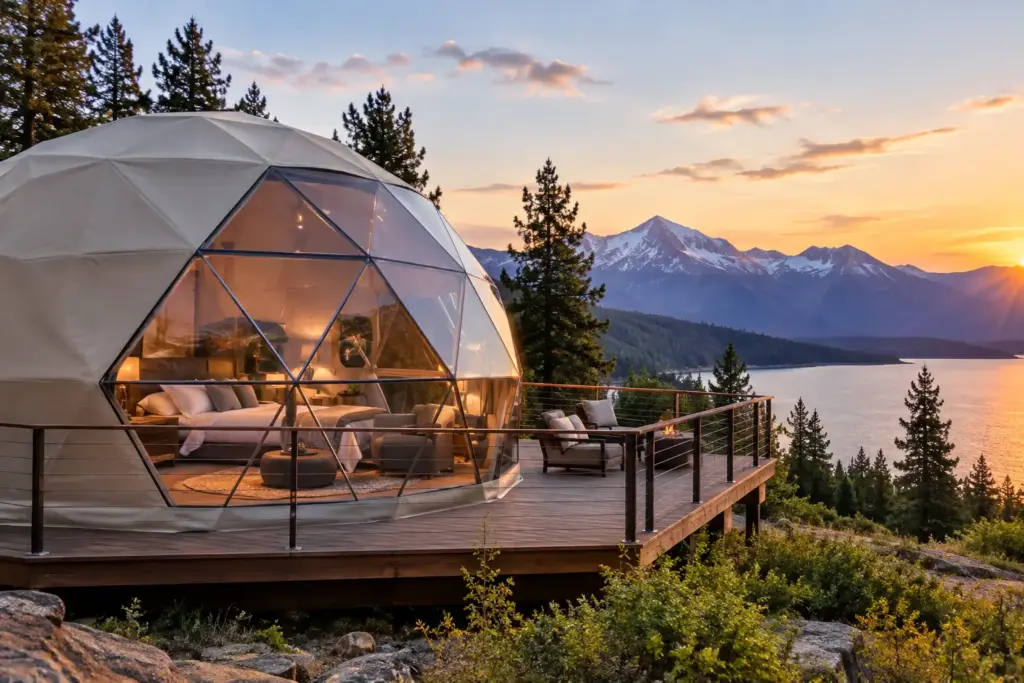
A geodesic dome can be the experience. Its curved architecture, expansive views, and optional transparent ceiling panels turn stargazing, snowfall, forest canopies, and changing weather into part of the stay. Guests do not just visit a destination – they sleep inside the landscape. That sense of immersion can create the memorable, shareable moments that support premium positioning.
This does not mean every guest prefers a dome. Families needing multiple bedrooms, travelers seeking a conventional full-home layout, or long-stay guests may find a cabin more practical. But for couples, wellness travelers, anniversary stays, and experience-led weekend bookings, a luxury dome can offer a level of emotional impact that is difficult to replicate with a traditional rectangular structure.
Build Speed and Site Disruption
For operators with a strong site but limited time to market, construction complexity matters as much as aesthetics. Conventional cabins often require a longer path through design, foundations, trades, inspections, and finishing work. The timeline can stretch further when sites are remote, labor is scarce, or material costs fluctuate.
Cabins can certainly be built efficiently, especially with prefab or modular approaches. Yet their construction still tends to involve more permanent site work and a broader range of finishing decisions. That may be appropriate for a flagship lodge or a property intended to operate as a conventional residential-style accommodation business for decades.
Geodesic domes are designed around a more modular approach. With proper site preparation and a qualified installation plan, they can be deployed with less disruption than a conventional build. This is particularly valuable on properties where preserving trees, views, terrain, and the natural feeling of arrival is central to the guest promise.
The ability to add units in phases also changes the investment conversation. Rather than committing to a full cabin village before validating demand, an operator may begin with a smaller collection of premium domes, refine the guest experience, and expand as occupancy and cash flow support it. For emerging retreat businesses and landowners entering hospitality for the first time, that measured path can reduce risk.
Year-Round Performance Is Not Optional
The strongest comparison between geodesic domes and cabins is not based on summer photographs. It is based on how each structure performs through rain, wind, heat, snow, and shoulder seasons.
A conventional cabin can offer excellent all-season comfort when it is properly insulated, heated, ventilated, and maintained. Its familiar wall cavities and roof assemblies give builders a well-established way to manage climate conditions. However, quality varies widely. A basic seasonal cabin is not automatically suited to cold-weather bookings or high-end guest expectations.
A premium dome built for four-season hospitality can also support year-round operation. Insulated, weatherproof materials, thoughtful ventilation, efficient heating and cooling design, and durable framing are essential. The structure should be specified for the climate, not selected only for appearance. In snowy regions, wind-prone areas, and places with substantial temperature swings, engineering, anchoring, and local code requirements deserve early attention.
Cabins may have an advantage where guests expect extensive interior square footage, multiple separate rooms, or residential-style storage. Domes may have an advantage where energy-efficient use of a compact footprint and a close connection to the outdoors are more valuable than a large floor plan. The best choice depends on your location, target rate, operating season, and guest profile.
Revenue Potential Comes From Differentiation
Neither a dome nor a cabin guarantees strong returns. Revenue depends on demand, access, amenities, photography, service standards, pricing discipline, and the quality of the overall destination. Still, the structure affects how easily you can establish a compelling market position.
A cabin often competes within a broad accommodation category. If the market already has many attractive cabin rentals, the operator may need to invest more heavily in interior design, hot tubs, private saunas, outdoor kitchens, or resort-style programming to justify a higher nightly rate. Those additions can be worthwhile, but the development budget should reflect them.
A geodesic dome begins with a more distinctive visual identity. For experience-driven travelers, that can support premium rates and create a stronger incentive to book directly. The dome can also serve as a powerful marketing image for social media, retreat materials, and event promotion. When paired with a private deck, elevated bath experience, fire feature, or curated wellness offering, it becomes a complete sanctuary rather than simply a place to sleep.
From a portfolio perspective, domes can help create a varied accommodation mix. A property might use cabins for families and longer stays while positioning domes for couples, wellness guests, and special-occasion travelers. This approach expands the audience without forcing every guest into the same type of lodging.
Operations, Maintenance, and Long-Term Flexibility
Cabins are conventional assets, which can make repairs and guest expectations straightforward. Local contractors generally understand the systems, replacement parts are familiar, and the layout is easy to furnish. At the same time, a larger cabin comes with more surfaces, more fixtures, and often more maintenance responsibility over time.
Domes require their own operational planning. The interior must be thoughtfully designed so furniture, heating, storage, and bathrooms feel intentional within the curved form. Cleaning procedures, condensation management, and climate control should be considered before launch, not after the first season. A premium dome should feel effortless to the guest, even when the behind-the-scenes details are carefully managed.
Where domes offer a meaningful advantage is relocation flexibility. If a property evolves, a site plan changes, or a hospitality concept proves stronger in another area of the land, a modular dome may offer options that a permanent cabin does not. That flexibility has real strategic value for operators testing a new market or developing a larger destination in stages.
Permitting and Property Strategy
Permitting should never be treated as an afterthought in either model. Local zoning, building codes, occupancy rules, sanitation requirements, fire access, utility planning, and short-term rental regulations can shape the project long before installation begins. A cabin may follow a more familiar code pathway, while dome requirements can vary by jurisdiction and use case.
The right early question is not whether a structure avoids approvals. It is about aligning the accommodation type with the rules, infrastructure, and long-term vision for the property. Engage local professionals where needed, understand the distinction between private use and commercial lodging, and plan utilities around your intended level of guest comfort.
For some sites, a cabin is the natural long-term anchor. For others, a dome-based hospitality concept can preserve more of the land’s character while creating a high-value guest experience with a scalable footprint.
Which Asset Fits Your Hospitality Vision?
Choose cabins when your business depends on generous square footage, multiple bedrooms, familiar residential layouts, or extended-stay functionality. They can be exceptional assets for family travel, group bookings, and destination properties seeking a classic lodge aesthetic.
Choose geodesic domes when your priority is immersive design, faster modular deployment, lower site disruption, and a stay that guests will remember long after checkout. They are especially well suited to luxury glamping resorts, wellness retreats, romantic getaways, and event-focused properties where the accommodation itself helps tell the story.
For many ambitious operators, the most profitable answer is not an either-or decision. A thoughtful mix can encourage guests to return for different occasions and allow the property to serve multiple booking segments. Start with the experience your land can deliver at its best, then choose the structure that makes that experience impossible to overlook.