
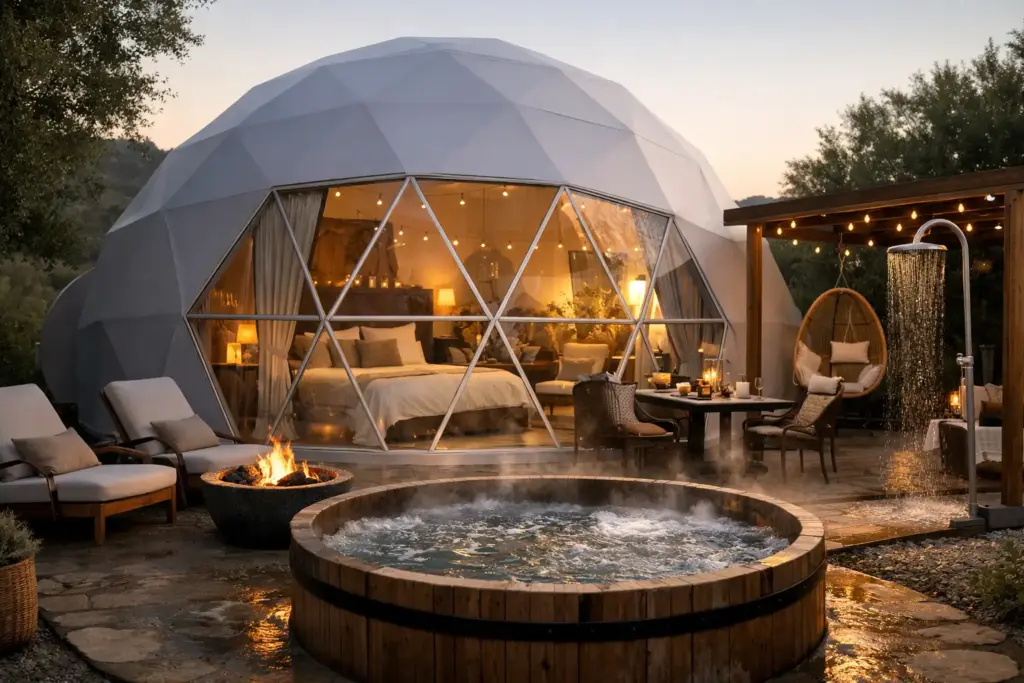
A luxury dome earns its premium rate long before a guest arrives. It begins with the promise visible in the listing: a private sanctuary under the trees, an expansive view of the sky, and comforts that feel considered rather than improvised. The best luxury dome amenities turn that promise into a stay guests remember, photograph, review, and recommend.
For resort owners, retreat operators, and landowners, the question is not simply which upgrades look impressive. The right amenities must strengthen guest satisfaction while supporting practical operations, all-season occupancy, and a strong revenue model. A feature that commands a higher nightly rate but creates constant maintenance demands may not be the best investment. The goal is a refined experience that works as beautifully behind the scenes as it does for the guest.
Best Luxury Dome Amenities for Premium Stays
A real bed and an elevated sleep experience
No amenity carries more weight than sleep. A dome can have dramatic architecture and extraordinary views, but an uncomfortable mattress will define the review. A premium queen or king bed, quality linens, layered pillows, blackout window treatments where appropriate, and bedside lighting create the sense of a true hospitality stay rather than a camping alternative.
Consider the setting when selecting the layout. A bed oriented toward a panoramic window or transparent ceiling panel lets the landscape become part of the room. In more private woodland sites, that view can be a major selling point. In properties with closer dome spacing, thoughtful window placement and privacy screening may matter more than a fully exposed design.
Private climate control for year-round comfort
Guests expect outdoor immersion, not exposure to the elements. Efficient heating and cooling are among the most commercially valuable dome amenities because they expand the operating season and protect the guest experience during temperature swings.
Insulated, weatherproof dome structures provide the essential envelope, while a properly sized mini-split system gives guests individual control over their comfort. This pairing can support a polished stay in summer heat, shoulder-season rain, and colder climates. For operators in the US and Canada, all-season usability can make the difference between a seasonal side business and a dependable lodging asset.
Climate control is also an operational decision. Equipment should be selected for the dome size, local weather patterns, and expected occupancy, then installed with service access in mind. A discreet, reliable system is more valuable than a complicated setup that interrupts stays when it needs attention.
A private bath that feels intentional
Private bathrooms consistently raise the perceived value of glamping accommodations. A well-designed bath with a walk-in shower, modern vanity, quality fixtures, a heated towel rack, and generous counter space makes the experience feel personal and complete.
For many properties, the highest-return approach is a compact ensuite bathroom designed into the dome plan or a nearby private bath pavilion with a covered path. The best option depends on site utilities, local codes, winter conditions, and the guest profile. Couples booking a romantic escape often prioritize total privacy. Wellness groups and event properties may have more flexibility with a beautifully designed shared bath concept.
The details matter. Adequate ventilation, durable water-resistant finishes, reliable hot water, hooks for robes, and storage for toiletries reduce friction for guests and housekeeping alike. Luxury is often felt in these quiet moments of convenience.
An outdoor soaking experience
A private hot tub, cedar soaking tub, or well-executed outdoor shower can transform a dome from memorable to exceptional. These features encourage guests to spend more time on site, extend the appeal of colder months, and create the visual moments that help properties stand apart in a crowded booking market.
However, water amenities require disciplined planning. Operators should account for electrical capacity, drainage, water use, cleaning protocols, privacy, and winter maintenance before making them part of the offering. A hot tub with a clear maintenance system can be a powerful revenue driver. One that is difficult to service between turnovers can erode margins quickly.
Where tubs are not practical, a private deck with Adirondack chairs, a fire feature, and a carefully framed view can provide much of the same emotional value with less operational complexity.
A kitchenette built for the way guests travel
A full residential kitchen is not necessary in every dome. In fact, it can consume valuable floor area and add cleaning time. Yet guests appreciate the ability to make coffee, chill a bottle of wine, prepare a simple breakfast, or warm a late-night meal.
A compact hospitality kitchenette often delivers the right balance: a small refrigerator, coffee maker, electric kettle, filtered water, attractive glassware, durable dishware, and a modest prep surface. Add a microwave or induction cooktop only when the property’s positioning, local regulations, and guest length of stay justify it.
For destination resorts or retreat properties with on-site dining, the kitchenette can remain intentionally light. For remote stays without food service nearby, more self-sufficiency becomes a meaningful booking advantage. The amenity package should reflect the guest journey, not a standard checklist.
Design Amenities That Make a Dome Feel Exceptional
Luxury is not created by filling a dome with more objects. It comes from proportion, material quality, light, and the confidence to leave space for the landscape. A restrained interior palette of warm wood, textured textiles, soft neutral tones, and durable furnishings gives the structure a timeless sense of place.
Transparent ceiling panels or panoramic windows can create a remarkable connection to the night sky and surrounding terrain. They are especially compelling for stargazing destinations, mountain properties, desert settings, and forest retreats. Still, these features should be evaluated against solar exposure, neighboring sightlines, and the need for shade or blackout options. Great design anticipates the guest’s 7 a.m. comfort as carefully as their midnight view.
Lighting deserves the same attention. Layered lighting gives guests options: warm ambient fixtures for evenings, reading lights at the bed, practical illumination in the bath and kitchenette, and low-glare pathway lighting outside. Avoid overly bright exterior lights that diminish the sense of wilderness or interfere with stargazing.
A dedicated sitting area also changes how a dome is used. Two comfortable lounge chairs, a small table, and a view create a place for morning coffee, quiet conversation, or a rainy afternoon. For wellness-focused properties, a yoga mat, meditation cushion, or compact infrared sauna may fit the brand more naturally than a television.
Amenities That Protect the Guest Experience
The amenities guests praise most are not always the ones they notice immediately. Reliable Wi-Fi, simple smart locks, luggage benches, adequate outlets, USB charging, climate controls with clear instructions, and secure pathways all make a stay feel effortless.
Wi-Fi is a particularly strategic choice. Some properties market a true digital detox, while others attract remote professionals who want nature without disconnecting from work. Rather than assuming every luxury guest wants the same thing, define the experience clearly. If connectivity is part of the promise, invest in coverage that performs consistently across the property.
Privacy is equally essential. Thoughtful spacing between domes, screening with native landscaping, private decks, sound-conscious site planning, and controlled views help protect the intimate quality guests are paying for. A beautiful interior cannot compensate for a neighboring unit that feels too close.
Safety and durability also belong in the luxury conversation. Non-slip surfaces, sturdy railings, reliable locks, fire safety equipment, weather-rated materials, and well-maintained decks build confidence without calling attention to themselves. Premium hospitality is not only about visual appeal. It is the assurance that every part of the stay has been considered.
Choosing Amenities With ROI in Mind
The most successful dome projects match amenity investments to a defined market position. A romantic couples retreat may prioritize a king bed, private bath, soaking tub, fire pit, and sky-facing design. A family-oriented glamping resort may gain more from flexible sleeping arrangements, a kitchenette, outdoor games, and dependable climate control. A wellness retreat may center its offer on quiet, restorative details such as a sauna, yoga space, natural materials, and exceptional sleep.
Before adding any feature, consider three questions: Will guests recognize its value when booking? Will it improve reviews or justify a higher rate? Can the team maintain it consistently at scale? An amenity that meets all three criteria is more likely to support long-term profitability.
StarWild Domes helps operators create premium outdoor hospitality environments where luxury meets nature without losing sight of durability, energy efficiency, and scalable deployment. The dome itself establishes the canvas. The amenity strategy determines how powerfully that canvas performs as a business.
The best investment is rarely the longest list of upgrades. It is a focused collection of comforts that make guests feel cared for, protected from the elements, and genuinely connected to the setting. Build that experience with intention, and each dome can become more than lodging. It can become the reason guests choose your property in the first place.