A standard cabin can add inventory. A well-placed dome can change how guests talk about your property.
That distinction matters if you are evaluating outdoor accommodations as a serious business move. What is a geodesic dome, exactly? At its core, it is a spherical or partially spherical structure made from a network of interconnected triangles. In hospitality, that geometric design translates into something far more valuable than visual appeal alone – a strong, efficient, weather-ready space that helps operators create high-end guest experiences with less site disruption than many conventional builds.
For resort owners, retreat operators, and landowners looking to grow revenue from outdoor property, the geodesic dome sits at the intersection of design, durability, and commercial practicality.
What Is a Geodesic Dome?
A geodesic dome is a framed structure built from repeating triangular elements that distribute stress across the entire shell. Because triangles are naturally stable, the dome can achieve impressive strength without relying on the same wall-and-roof system used in traditional rectangular buildings.
That shape is what gives a geodesic dome its distinctive silhouette, but it also explains why these structures perform so well in demanding environments. Wind, snow loads, and changing temperatures are managed through the geometry itself. Instead of concentrating force in a few places, the structure spreads it across the frame.
For hospitality buyers, this is not just an architectural curiosity. It is a practical advantage. A geodesic dome can offer a spacious interior, elevated guest appeal, and a smaller construction footprint, all while supporting year-round use when properly engineered and insulated.
Why the Shape Matters
The most compelling thing about a geodesic dome is not that it looks different. It is that the form works hard behind the scenes.
A dome encloses a large amount of interior volume with relatively efficient use of materials. That can make it a smart option for operators who want to create an immersive environment without the complexity of traditional construction. The curved envelope also supports energy performance, because there is less exterior surface area relative to the interior space than in many box-shaped structures.
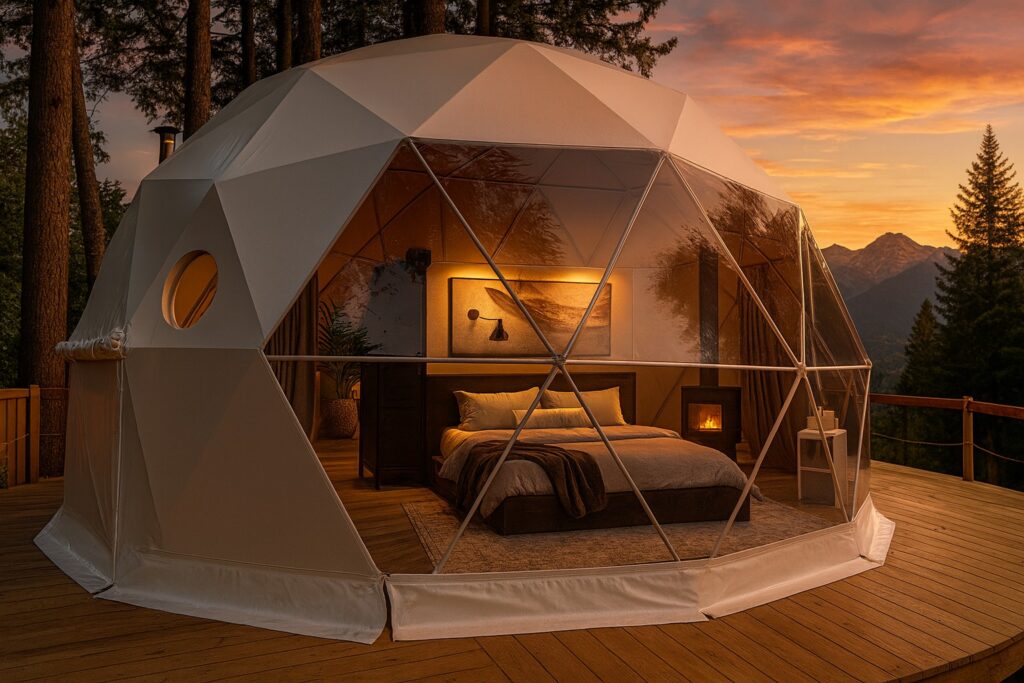
There is also a guest-facing benefit that should not be overlooked. The interior feels open, airy, and memorable. The panoramic form creates a sense of escape that aligns naturally with luxury glamping, wellness retreats, and nature-based stays. Guests are not simply booking a room. They are booking a setting.
That experiential value is often what supports stronger nightly rates.
How Geodesic Domes Are Used in Outdoor Hospitality
In the hospitality market, geodesic domes are rarely treated as novelty structures. They are used as revenue-generating assets.
Depending on the property and business model, a dome may serve as a luxury guest suite, private spa space, yoga studio, dining pavilion, event venue, or multi-season retreat accommodation. For operators with land that has views, privacy, or natural character, domes help turn underused acreage into bookable inventory.
This is especially attractive for businesses that want to expand without committing to the long timelines, higher site disturbance, and heavier infrastructure demands that often come with conventional lodging construction. A dome can create a premium accommodation category while preserving the sense of landscape that guests came for in the first place.
That said, the use case matters. A dome intended for occasional events has different requirements than one designed for year-round overnight stays. Insulation, climate control, foundation planning, utilities, interior layout, and code considerations all need to match the commercial purpose.
What Makes a Geodesic Dome Attractive for Investors and Operators
For business-minded buyers, the appeal goes beyond design.
A geodesic dome can support faster project deployment, lower site impact, and modular growth. If you are launching a glamping concept or adding inventory to an existing resort, that flexibility matters. You may be able to start with one or a few units, validate demand, and expand in phases rather than overbuilding upfront.
The revenue side is equally important. Domes are visually distinctive, and that distinction can support premium positioning. In a market where guests are actively searching for stays that feel exclusive, photogenic, and immersed in nature, domes often perform well because they are part accommodation and part experience.
There is also an operational case to make. Well-built domes can be engineered for durability, insulation, and weather resistance, reducing some of the friction that operators fear when considering outdoor lodging. The right dome is not a seasonal tent dressed up for marketing. It is a serious hospitality structure designed for repeated use and guest comfort.
What a Geodesic Dome Is Not
It helps to clear up a common misunderstanding. A geodesic dome is not automatically luxurious, and it is not automatically suitable for hospitality just because it has a dome shape.
Quality varies significantly. Some dome products are geared toward temporary recreational use. Others are designed for commercial deployment, with stronger framing systems, insulation packages, weatherproof membranes, transparent viewing panels, and integration for power, plumbing, and HVAC.
That distinction affects everything from guest comfort to maintenance to long-term return. If your goal is to build your business, not just place an eye-catching structure on the land, the dome needs to perform as an operational asset.
This is where specification matters more than aesthetics alone.
The Trade-Offs to Understand
A geodesic dome offers clear advantages, but it is not a one-size-fits-all answer.
Interior planning can take more thought than a rectangular structure. The curved walls create a beautiful atmosphere, yet they also influence furniture placement, storage design, and bathroom layouts. A strong hospitality design approach solves this, but it should be considered early.
Site conditions also matter. Access, grading, drainage, utility runs, climate exposure, and local permitting all shape what is possible and what it will cost. A dome may reduce disruption compared with traditional builds, but it does not remove the need for disciplined planning.
Then there is brand fit. If your property is positioned around elevated nature experiences, wellness, or design-forward accommodations, a dome can feel perfectly aligned. If your brand promise is conventional business lodging, the same structure may not carry the same value.
The right question is not simply whether a dome is beautiful. It is whether it supports the guest experience, rate strategy, and operating model you want to build.
Why Geodesic Domes Work So Well for Premium Guest Stays
The strongest dome projects succeed because they combine emotional appeal with practical comfort.
Guests are drawn to the visual drama – the curved architecture, the feeling of shelter, the connection to landscape, and the possibility of stargazing through a clear panel overhead. But repeatable business performance depends on what happens after the guest arrives. Is the space climate controlled? Is it quiet in bad weather? Does it feel private, polished, and worth the rate?
A thoughtfully designed geodesic dome can answer yes to those questions. That is why these structures have become so relevant in upscale outdoor hospitality. They offer the rare mix of architectural distinction and business utility.
For operators, that opens up a compelling path. You can create accommodations that feel immersive and uncommon, while still prioritizing durability, energy efficiency, and scalable deployment. In a crowded lodging market, that balance is hard to ignore.
What to Look for If You Are Considering a Geodesic Dome
If you are evaluating domes for commercial use, focus on performance before marketing language. Ask how the structure handles insulation, weather loads, moisture control, HVAC integration, and long-term maintenance. Look at installation requirements, site preparation, and whether expansion is possible if the first phase performs well.
It is also worth considering how the dome contributes to your pricing power. The best hospitality investments do not just fill space on the land. They create a stay guests are willing to seek out, share, and pay more for.
That is why many operators turn to premium dome partners such as StarWild Domes when planning revenue-focused outdoor accommodations. The goal is not simply to place a structure. It is to create a durable, design-led asset that supports guest satisfaction and strong ROI potential.
If you are still asking what is a geodesic dome, the simplest answer is this: it is a high-performance structure with uncommon visual impact. For the right property, it is also a smarter way to turn a natural setting into lasting hospitality value.
The land already holds the atmosphere. The right dome helps you turn that atmosphere into a destination.