A guest can forgive a remote location. They are far less likely to forgive a cold night, a damp canvas wall, or a stay that feels indistinguishable from a well-equipped campsite. For operators weighing a geodesic dome vs. a safari tent, the real question is not simply which structure looks better in listing photos. It is which asset can support the guest experience, operating season, rate strategy, and growth plan you intend to build.
Both options can create memorable outdoor accommodation. A well-designed safari tent carries a romantic, expedition-inspired character that works beautifully in the right climate and concept. A geodesic dome brings a more architectural form of nature immersion, with insulated comfort and panoramic design that can extend the season and elevate perceived value.
The strongest choice depends on your market, site conditions, capital plan, and brand promise. Here is how the two compare when hospitality performance matters as much as visual appeal.
Geodesic dome vs safari tent: the core difference
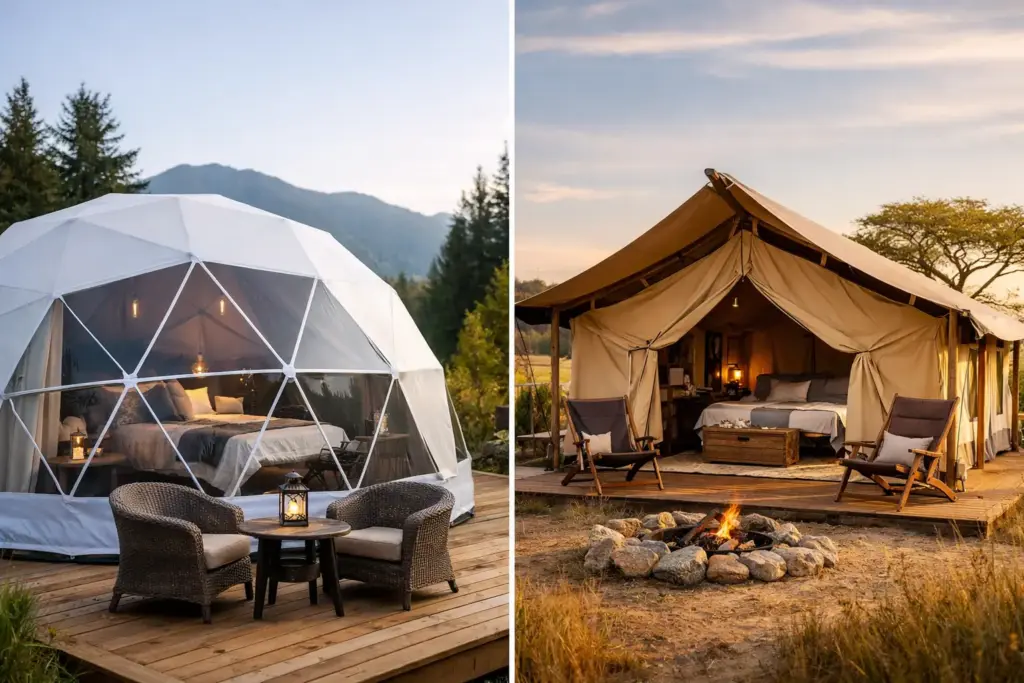
A safari tent is typically a fabric-based structure with a framed platform, canvas walls, and a defined interior layout. It can feel relaxed, nostalgic, and highly connected to the landscape. Many operators choose safari tents for warm-weather destinations, camp-style properties, and concepts where a softer, more traditional glamping aesthetic fits the brand.
A geodesic dome uses a triangulated frame and engineered cover to create a self-supporting, curved enclosure. For upscale hospitality, the defining advantage is its ability to pair visual drama with a more controlled interior environment. Insulation packages, weatherproof materials, hard doors, and optional panoramic or transparent panels help create an accommodation that feels closer to a boutique suite than a tent.
That distinction shapes nearly every business consideration that follows. Safari tents often emphasize seasonal escape. Domes are often selected to make luxury outdoor stays viable across more of the calendar.
Guest experience and pricing power
A safari tent can be deeply appealing when guests arrive expecting a refined camping experience. Canvas textures, covered decks, and open-air details create an immediate sense of adventure. In temperate destinations, that atmosphere can be exactly what a property needs to stand apart from conventional cabins or hotel rooms.
Its limitation is expectation management. Even the most beautifully furnished tent still signals a degree of exposure to temperature swings, wind, humidity, insects, and weather noise. Some guests welcome that. Others, particularly couples booking premium weekends or travelers accustomed to boutique hospitality, may view it as a compromise.
A dome generally gives operators more control over the promise they sell. The rounded form is visually distinctive before guests even step inside. Once inside, the experience can include climate control, a private bathroom, a king bed, elevated furnishings, and broad views of the surrounding land. Transparent ceiling sections can turn a standard overnight stay into a stargazing experience without giving up the comfort of a protected room.
That does not mean every dome automatically earns a higher nightly rate. Interior design, privacy, amenities, views, and service still determine rate potential. But a dome can make it easier to justify premium positioning because it presents as a destination accommodation rather than an upgraded campsite.
Consider the traveler you want to attract
If your ideal guest is a family seeking a summer camp experience, a safari tent may align naturally with the journey. If you are targeting anniversary travelers, wellness guests, design-conscious urban professionals, or retreat participants, a dome may better support the level of comfort and visual distinction those audiences expect.
For event venues, domes can also serve beyond overnight lodging. Depending on size and configuration, they can become wellness studios, intimate dining spaces, reception lounges, or weather-protected gathering areas. That flexibility adds value to a property with multiple revenue streams.
Seasonality is often the deciding factor
For many North American operators, the comparison turns on one practical issue: how many nights per year can the unit generate revenue?
Safari tents perform best in regions with mild, predictable weather or in businesses designed around a defined warm-weather season. They can be a sensible choice for properties that close in winter, have limited utility infrastructure, or prioritize lower initial investment over annual occupancy. The trade-off is that a short shoulder season can quickly narrow the booking window, especially in areas with heavy rain, high winds, significant snowfall, or major temperature changes between day and night.
A properly specified dome is better suited to all-season operation. Insulated wall systems, sealed construction, and efficient heating and cooling can help create a stable interior through hot summers, cold winters, and unpredictable shoulder seasons. For resort owners and landowners in the United States and Canada, that capability can have a direct effect on revenue forecasting.
The value is not only winter bookings. Year-round operation lets you market autumn foliage stays, spring wellness escapes, snowy weekend getaways, and midweek retreats outside peak vacation periods. More available nights create more opportunities to build occupancy, test packages, and smooth out seasonal demand.
Of course, a dome must be designed for local conditions. Snow loads, wind exposure, elevation, drainage, site access, and utility requirements should all inform the structure specification. All-season potential is created through the right product and site planning, not by assuming every dome configuration performs identically.
Durability, maintenance, and operational confidence
Canvas can be beautiful, but it asks for consistent care. Safari tent operators should plan for cleaning, re-tensioning, mildew prevention, zipper and screen repairs, and periodic fabric replacement. Trees, pollen, coastal moisture, wildlife, and frequent storms can increase that maintenance burden. A tent may be the right choice, but it should be treated as a hospitality asset with an active upkeep schedule, not a set-it-and-forget-it structure.
Geodesic domes have their own maintenance needs, including exterior cleaning, seal inspections, HVAC servicing, and care for doors and window systems. Yet their hardier enclosure and engineered geometry are often better aligned with repeated guest turnover and demanding weather. The structure can also offer a greater sense of security for guests and staff, particularly where wind, rain, or wildlife are operational concerns.
From an ownership standpoint, reduced weather disruption can be meaningful. A reservation canceled because a unit is uncomfortable or compromised by conditions does more than lose one night of revenue. It can lead to refund requests, poor reviews, staff pressure, and a weaker reputation during the property’s most important early months.
Installation and site impact
Safari tents are often perceived as the faster, lighter-build option, and they can be. Their modular nature and platform-based construction may work well where a property wants a low-profile footprint or needs to phase development carefully.
Domes also offer a modular path to expansion. A well-planned installation can minimize site disruption compared with traditional lodging construction, particularly when units are positioned around existing views, trees, and topography. Their relocatable nature can be valuable for operators testing a new concept, adapting a venue layout, or expanding inventory in stages.
Neither structure eliminates permitting, zoning, utility, accessibility, fire safety, or wastewater considerations. Those variables vary widely by jurisdiction. Before choosing based on speed alone, evaluate the full project scope: site preparation, foundations or platforms, electrical service, water, septic capacity, HVAC, furnishings, and the local approval process. The accommodation is only one part of the guest-ready investment.
Which option offers stronger ROI potential?
A safari tent may deliver attractive returns when its lower entry cost, seasonal model, and target guest align. It can be especially compelling for operators with established summer demand, a scenic site, and a clear plan to maintain occupancy during a concentrated season.
A geodesic dome often requires a higher initial investment, particularly when configured for premium, all-season use. Its ROI potential comes from a different equation: more bookable nights, a stronger ability to command premium rates, lower exposure to weather-driven closures, and a more differentiated product in crowded glamping markets.
The financial decision should be based on contribution per available night, not simply the purchase price. Model realistic occupancy by month, not just peak season. Include cleaning labor, utilities, maintenance, OTA fees, insurance, financing, replacement reserves, and the revenue impact of private bathrooms or other premium amenities. Then compare how each structure supports your intended average daily rate and annual operating calendar.
For a property pursuing a luxury, year-round brand, the dome frequently creates the more durable platform for growth. For a highly seasonal camp concept, a safari tent may be the more proportionate investment.
Choose the structure that supports your promise
The best glamping accommodation does not begin with a trend. It begins with a clear promise to the guest: what they will feel, what comfort they can expect, and why your property is worth choosing over every other weekend escape.
Choose a safari tent when its open-air character and seasonal rhythm are central to that promise. Choose a dome when you want to create a refined sanctuary where luxury meets nature in every season while building an asset designed to scale. Before placing the first unit, let your projected guest experience and operating calendar lead the decision. They will shape the returns long after the structure becomes part of the landscape.