
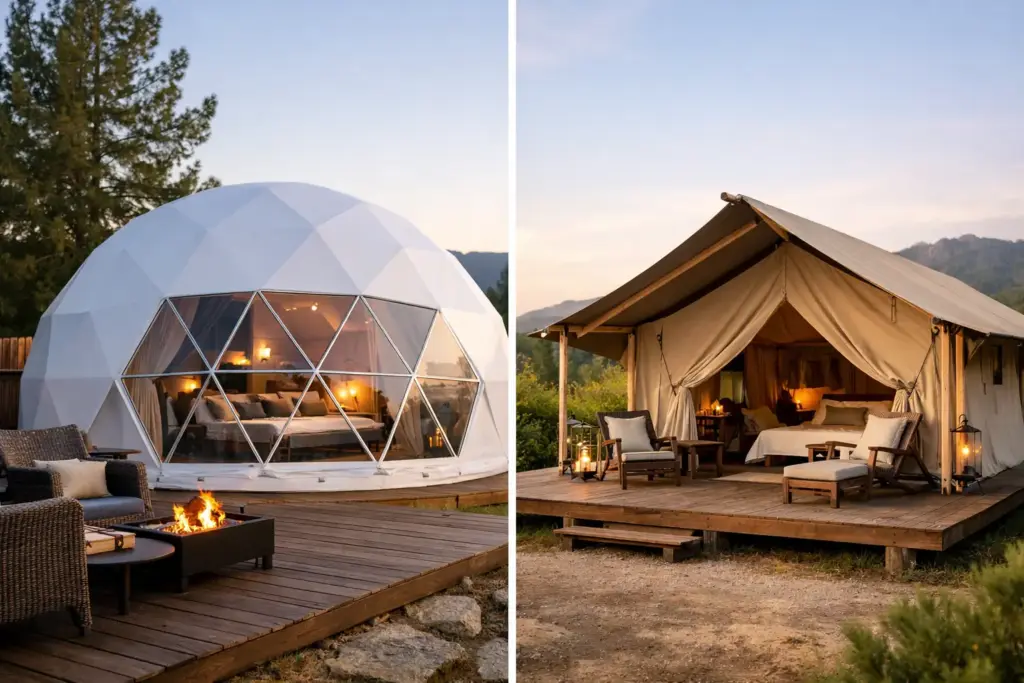
A guest may accept a canvas tent for a summer weekend. They are far less forgiving when a cold front arrives at midnight, wind presses against the walls, or humidity follows them into bed. For operators weighing an insulated dome versus canvas tent, that difference is not simply about architecture. It shapes your season length, nightly rate, maintenance demands, brand perception, and long-term revenue.
Canvas tents have earned their place in outdoor hospitality. They can create an approachable, romantic camp atmosphere and help a new concept open with a lower initial investment. But for properties built around premium stays, repeat bookings, and all-season performance, an insulated dome is often the more strategic hospitality asset.
Insulated Dome Versus Canvas Tent: The Commercial Difference
The central question is not which structure looks better in a photograph. Both can be visually compelling. The more useful question is which one supports the guest experience and operating model you want to deliver.
A canvas tent is generally a seasonal shell. Its fabric construction creates a direct connection to the outdoors, but it also leaves the interior more exposed to temperature swings, moisture, sound, and weather-related wear. It can work exceptionally well for mild-weather, rustic, and limited-season concepts where the experience is intentionally camp-like.
An insulated geodesic dome is designed to create a protected interior environment while preserving the emotional pull of nature. Insulated walls, a weather-resistant exterior, and an engineered frame give operators greater control over comfort. That control matters when your guests expect a warm bed in winter, air-conditioned relief in summer, and a refined sanctuary regardless of the forecast.
For an upscale resort, retreat, or private landowner building a glamping business, the dome’s advantage is consistency. Consistency protects reviews. It supports premium pricing. It also gives your sales team confidence when marketing stays beyond the narrow window of perfect weather.
Guest Comfort Sets the Ceiling on Your Nightly Rate
Luxury outdoor lodging succeeds when guests feel they have escaped ordinary life without sacrificing the comforts that make a stay restorative. A tent can feel magical, but its limitations become obvious when weather changes.
Canvas provides little inherent insulation. Heating and cooling systems must work harder, and the interior can still feel uneven from one side of the tent to the other. Condensation, drafts, and outside noise can also affect sleep quality. Those concerns may be acceptable for adventure-oriented travellers, but they can conflict with a premium promise.
An insulated dome offers a more stable environment for a king bed, private bath, lounge area, and curated furnishings. Climate control becomes more practical, while insulation helps reduce heat transfer and moderates exterior noise. The result is not merely a warmer room. It is a more dependable experience – one that supports honeymoons, wellness weekends, executive retreats, and high-value special occasions.
The panoramic shape also changes how a guest experiences the site. A dome can frame forest, mountain, water, or desert views while providing the security of an enclosed suite. Optional transparent ceiling panels can extend that sense of immersion after dark, turning stargazing into part of the accommodation rather than an activity guests need to leave their room to enjoy.
Year-Round Use Can Change the Business Case
A seasonal canvas operation may perform well during peak months, especially in temperate destinations with strong summer demand. Yet a short operating calendar concentrates revenue into a limited period while fixed costs, marketing, land payments, and management responsibilities continue throughout the year.
Insulated domes give operators the opportunity to design for broader utilization. With appropriate site planning, heating, cooling, and local engineering considerations, they can support stays through colder, hotter, and less predictable seasons. That opens the door to shoulder-season packages, winter wellness escapes, holiday stays, and weekday corporate or retreat bookings.
This does not mean every property needs year-round lodging. In a coastal market with a defined summer identity, a tent may align beautifully with the brand and demand pattern. But if your financial model relies on a longer season, an insulated structure is usually the more credible foundation.
A longer booking window can improve revenue potential in two ways: it creates more sellable nights, and it reduces dependence on a few high-demand weekends. Operators can build promotions around foliage season, snowfall, astronomy events, or quiet midweek restoration instead of closing when the temperature drops.
Durability and Maintenance Are Part of the Guest Experience
Canvas tent systems require attentive care. Fabric can need cleaning, retreatment, tension adjustments, repairs, and eventual replacement. Zippers, screens, windows, and flooring connections are all exposed to repeated guest use and changing conditions. In wet or humid environments, mildew prevention and ventilation become ongoing operational priorities.
None of this makes canvas a poor choice. It simply means the lower upfront cost should be evaluated alongside labor, upkeep, replacement cycles, and downtime. A tent that looks tired in guest photos can quickly undermine a premium positioning.
A quality dome is built for a different performance standard. Its structural frame and exterior membrane are intended to withstand regular hospitality use, and its hard, insulated envelope is easier to furnish and maintain as a finished guest suite. Durable surfaces also make it easier to create the elevated details that guests notice: polished flooring, built-in storage, a well-appointed bathroom, layered lighting, and climate equipment that does not dominate the room.
Local weather conditions still matter. Snow loads, wind exposure, drainage, wildfire considerations, and permitting requirements should be assessed early with qualified local professionals. The right structure is one that matches both your vision and the realities of your site.
Installation, Site Impact, and Scalability
Traditional construction can consume time, disrupt the landscape, and introduce difficult-to-control costs. Both tents and modular dome structures offer a lighter-touch alternative, but they serve different ambitions.
Canvas tents can be quick to deploy, making them useful for pilot programs, seasonal overflow, or event-oriented properties. Their flexibility is a genuine advantage when a business is testing demand or operating on a simple seasonal model.
Modular domes offer flexibility with greater permanence of experience. They can be installed with minimal site disruption compared with conventional buildings and can be relocated if a property’s layout evolves. For hospitality operators, that makes it possible to begin with a small collection of suites, validate demand, and expand in phases without redesigning the entire property.
This scalability is especially valuable for landowners who want to build their business deliberately. Rather than committing immediately to a large lodge, they can create a high-impact first phase, establish operating systems, collect guest feedback, and add units as occupancy and cash flow support growth.
When a Canvas Tent Is the Better Fit
The decision should not be ideological. Canvas is often the better choice when the property is intentionally seasonal, the guest is seeking a more rustic camp experience, and the local climate is reliably mild during operating months. It can also be effective for temporary events, low-complexity accommodation, or early-stage concepts with limited capital.
The trade-off is that the tent itself may set a lower ceiling on comfort, design sophistication, and year-round occupancy. If your value proposition is adventure at an accessible price, that may be entirely appropriate.
An insulated dome is the stronger choice when your guests expect privacy, climate-controlled comfort, refined interiors, and memorable views in every season. It is particularly suited to destination resorts, wellness properties, luxury retreat operators, and venues seeking accommodations that feel distinctive enough to command premium rates.
Choose the Structure That Supports Your Promise
Your accommodation is not just inventory. It is the physical proof of what guests are buying before they ever arrive. A canvas tent can promise a beautiful night outdoors. An insulated dome can promise an immersive stay where luxury meets nature, even when nature is cold, wet, windy, or intensely hot.
For operators building a premium outdoor hospitality business, that reliability can be the difference between a seasonal attraction and a durable revenue platform. StarWild Domes helps property owners translate that opportunity into design-forward spaces built for exceptional stays and meaningful growth.