
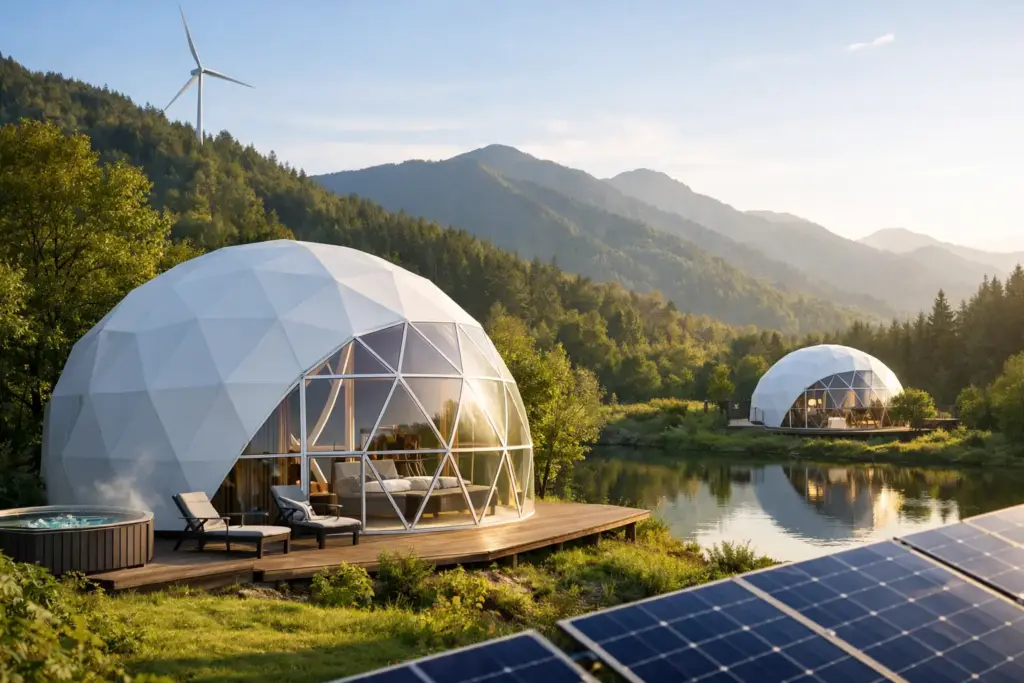
A dome may look like an architectural statement, but for an outdoor hospitality operator, its energy performance is a business decision. Are geodesic domes energy efficient? They can be, often exceptionally so, when the structure is specified for the local climate, properly insulated, thoughtfully oriented, and equipped with right-sized heating and cooling.
The shape itself creates meaningful advantages. But geometry alone does not guarantee lower utility bills. A luxury glamping dome with a broad clear roof, weak insulation, or an oversized HVAC system can lose much of its efficiency potential. The strongest results come from treating the dome as a complete year-round guest suite rather than simply a striking shell.
Why geodesic domes can use less energy
A geodesic dome encloses a generous amount of interior volume with relatively little exterior surface area. Compared with many conventional rectangular structures of similar usable space, there is less wall and roof area exposed to outdoor temperatures. Less exposed envelope can mean less heat loss in winter and less unwanted heat gain in summer.
The dome’s curved form also helps air move differently within the space. There are fewer hard corners where air can stagnate, and the continuous interior can support more consistent circulation when heating and cooling equipment is designed well. For guests, that translates into a more comfortable sanctuary with fewer cold corners or overheated zones.
Structural efficiency matters, too. The triangulated frame distributes loads across the dome, allowing a durable building envelope with a light, engineered structural system. For hospitality projects, that can support faster deployment and less site disruption than a conventional build, while creating a distinctive accommodation guests are willing to pay more to experience.
Still, the shape is only the starting point. A dome is energy efficient because of its building envelope and systems, not because it is round.
The factors that determine whether a dome performs well
1. Insulation is the foundation
Insulation is the clearest dividing line between a seasonal glamping structure and an all-season lodging asset. In cold climates, an under-insulated dome will shed heat through its roof and walls quickly. In hot, sunny regions, insufficient insulation allows solar heat to enter the interior and forces air conditioning to work harder.
For resort operators in the United States and Canada, the right insulation level depends on local temperature swings, wind exposure, snow conditions, and the intended operating season. A property in the Rocky Mountains, upper Midwest, New England, or Canada needs a different thermal strategy than a coastal California retreat or desert wellness destination.
Insulated wall systems, properly sealed seams, insulated flooring, and carefully detailed connections around doors and windows all work together. The goal is to limit thermal bridging, where heat travels through framing or poorly protected joints. This is less visible than a panoramic window, but it has a direct effect on guest comfort, HVAC runtime, and long-term operating costs.
2. Air sealing protects comfort and operating margin
Even excellent insulation cannot perform as intended if uncontrolled air leakage is allowed through the envelope. Drafts make a suite feel less premium, especially near the bed, lounge area, or bathroom. They also introduce humidity, dust, and temperature swings that place a heavier load on mechanical systems.
A quality dome installation should include tightly sealed panel joints, well-fitted doors, weatherproof window details, and a properly integrated ground or platform connection. This is especially important on exposed ridgelines, lakefront sites, and open fields where wind can be a constant operating condition.
A tightly sealed structure should not mean stale air. It means ventilation can be intentional. Quiet mechanical ventilation or controlled fresh-air strategies can preserve indoor air quality without sacrificing the heating or cooling already paid for.
3. Glazing must be beautiful and strategic
Panoramic windows and transparent ceiling panels are central to the appeal of luxury domes. They frame forests, mountains, desert skies, and starlit evenings in a way conventional rooms rarely can. They also require careful planning because glass typically insulates less effectively than a well-built opaque wall.
The best approach is not to avoid glazing. It is to use it where it creates the greatest guest value and manage its solar impact. High-performance glazing, insulated window assemblies, shade solutions, and an orientation that welcomes desirable views without taking the full force of afternoon sun all make a difference.
In a northern climate, thoughtfully positioned glazing can provide useful passive solar warmth during cooler months. In hot climates, the same exposure can create uncomfortable heat gain if it is not shaded. A transparent roof feature may be ideal for nighttime stargazing, yet it should be paired with a cover, shade, or climate-control strategy when daytime solar load is intense.
4. The floor and platform deserve equal attention
Heat does not only move through walls and roof panels. It can also escape into the ground below. An insulated, well-built platform helps protect the interior from cold floors, moisture, and unwanted air movement. It also creates a more polished guest experience, supporting finishes, plumbing, and furnishings that feel like a true boutique suite rather than a temporary shelter.
For operators, a modular foundation or platform system can offer another advantage: it may reduce excavation and preserve more of the landscape. That supports the nature-forward experience guests expect while making future expansion or relocation more practical.
Heating and cooling should match the actual suite
A dome does not need an oversized mechanical system to feel comfortable. In fact, too much capacity can cause short cycling, uneven temperatures, excess noise, and unnecessary energy use. Proper sizing should account for the dome’s insulation, glazing area, local climate, occupancy, bathroom configuration, and solar exposure.
High-efficiency mini-split systems are a popular fit for many premium dome applications because they can heat and cool effectively, operate quietly, and allow individual control for each unit. This is particularly valuable in a multi-dome resort, where an empty suite does not need to be conditioned at the same level as an occupied one.
Ceiling fans can improve perceived comfort in warm weather and help distribute rising heat in cooler months. Smart thermostats, occupancy settings, and simple guest-facing controls also help operators manage consumption without making the stay feel restrictive. The right system should disappear into the experience: guests notice the view, the quiet, and the comfort, not the equipment working behind it.
Site planning can reduce energy demand before construction begins
The most cost-effective energy decision often happens before a dome is installed. Orientation, topography, existing tree cover, prevailing wind, and access to utilities all affect long-term performance.
A south-facing exposure may be valuable in a cold climate, while a western exposure can be challenging where late-day sun is intense. Mature trees can provide welcome summer shade, but dense year-round shade may increase heating demand and reduce natural light. On windy sites, placing domes behind natural windbreaks or using the terrain to reduce exposure can improve comfort and lessen heat loss.
Operators should also plan spacing between units. Privacy is essential for a premium stay, but so is preserving airflow, views, service access, and the ability to place each dome in its most favorable solar position. A strong site plan can make every unit more desirable while preventing avoidable energy penalties.
Energy efficiency supports stronger hospitality economics
For an outdoor lodging business, efficiency is not simply an environmental talking point. It influences the cost to operate each occupied night, the reliability of year-round reservations, and the guest reviews that sustain premium rates.
A comfortable dome can extend shoulder-season demand and create confidence for winter bookings, rainy-weekend stays, and summer heat events. Better temperature control also protects furnishings, reduces condensation risk, and helps maintain the elevated finish guests expect from a luxury retreat.
That is why energy performance should be evaluated alongside revenue potential. A less expensive structure may appear attractive at the outset, but higher heating and cooling costs, seasonal limitations, and guest discomfort can weaken the return over time. Investing in an insulated, weatherproof dome system can support a more dependable lodging asset from the first season onward.
At StarWild Domes, the opportunity is to create accommodations where luxury meets nature without asking guests to compromise on comfort. For a single private retreat or a scalable resort concept, the most successful dome projects begin with a climate-specific specification and a site plan that respects both the land and the operating model.
The practical question is not whether a dome can be energy efficient. It is whether every decision, from insulation and glazing to orientation and HVAC, is being made to turn that potential into a comfortable, revenue-generating stay in every season.