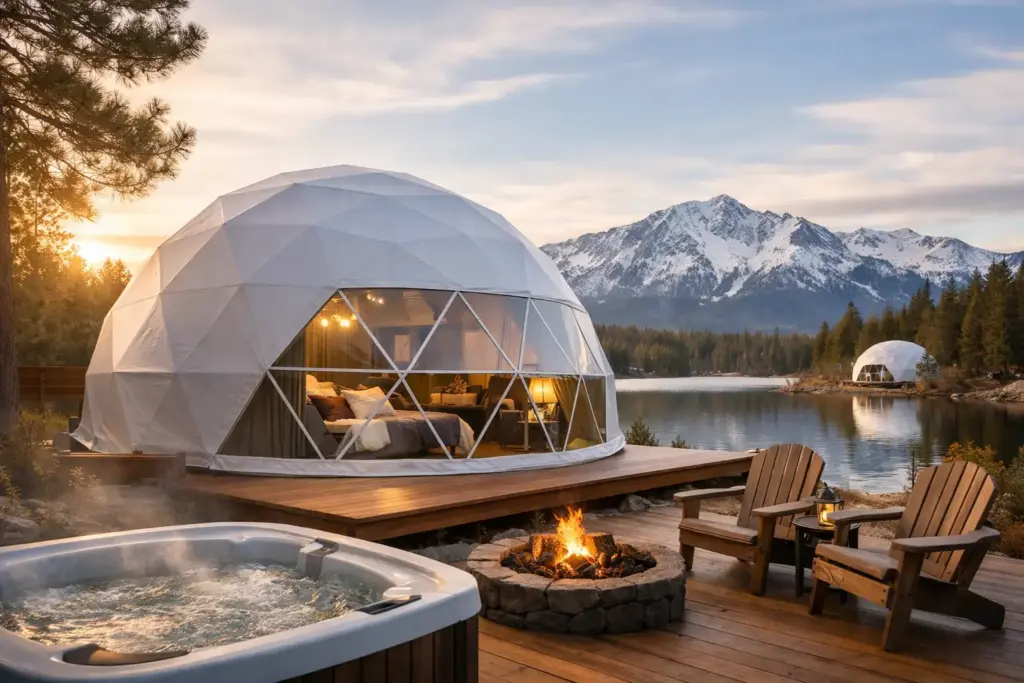
A summer-only structure can look appealing on paper – until shoulder season arrives, weather shifts, and your booking window narrows. For hospitality operators, that is where an all-season glamping dome changes the equation. It is not just a design choice. It is a revenue decision, an operations decision, and often the difference between a short-lived concept and a year-round hospitality asset.
For resorts, retreat properties, and landowners building premium outdoor accommodations, the right dome has to do more than photograph well. It needs to protect guest comfort in heat, cold, rain, and wind while preserving the sense of escape that makes glamping worth paying for in the first place. That balance – where luxury meets nature without sacrificing business practicality – is exactly why all-season capability matters.
What makes an all-season glamping dome different
Not every dome marketed for outdoor use is designed for real year-round hospitality. The difference is usually found in the parts guests never praise directly but always feel: insulation, weatherproofing, structural integrity, ventilation, and climate control compatibility.
A true all-season glamping dome is designed to maintain comfort across varied conditions, not just survive them. That means better thermal performance in winter, more stable interior temperatures in summer, and stronger resistance to moisture, condensation, and wind exposure. For operators in the United States and Canada, those factors are not optional. They shape guest satisfaction, maintenance demands, and the ability to keep inventory available beyond peak months.
This is also where premium dome design becomes commercially meaningful. A panoramic structure with elegant lines and immersive views may attract attention, but if the unit cannot support reliable year-round use, it limits occupancy potential. When a dome is engineered for all-season operation, the visual experience becomes more than a brand statement. It becomes an income-producing accommodation that works harder across the calendar.
The business case for an all-season glamping dome
Adding lodging inventory through traditional construction can be slow, expensive, and site-intensive. Many property owners want to expand faster, test a concept before scaling, or add units in locations where permanent construction is less practical. An all-season glamping dome offers a different path – one that supports premium nightly rates while reducing some of the friction associated with conventional builds.
The biggest advantage is revenue duration. If a structure performs only in mild weather, your earning season is compressed. If it performs in winter, summer, and shoulder months, your operating model becomes more resilient. You can market romantic cold-weather stays, wellness retreats in spring and fall, and high-demand summer escapes from the same structure.
That expanded season can improve return on investment in a straightforward way: more nights available to sell, more flexibility in packaging experiences, and less dependence on a narrow booking window. For event venues and retreat operators, year-round use also helps diversify income. A dome can serve as lodging, a private spa setting, a treatment space, a dining environment, or a gathering area depending on the property concept.
There is also a strategic brand advantage. Guests increasingly expect memorable accommodations, not just a place to sleep. Distinctive structures command attention, but comfort is what drives reviews, repeat bookings, and premium pricing. A dome that feels warm during snowfall or cool during summer heat reinforces the promise of luxury in a way that seasonal structures often cannot.
Guest experience is where value becomes visible
Hospitality buyers do not invest in structures alone. They invest in experiences that guests are willing to book, remember, and recommend. That is why all-season capability should always be evaluated through the lens of the guest stay.
When guests step into a dome, they expect immersion without exposure. They want wide views, natural light, and a connection to the landscape, but they also want temperature control, a quiet interior, and protection from the elements. If the dome feels drafty, overheated, damp, or noisy during weather events, the experience loses its premium edge.
An all season glamping dome supports the kind of comfort that makes luxury outdoor hospitality sustainable. In colder climates, that may mean insulation and heating compatibility that allow winter bookings without compromise. In warmer regions, it may mean ventilation strategies and cooling performance that keep the space usable in high temperatures. The right solution depends on geography, elevation, and the way your property plans to operate.
That last point matters. There is no universal dome configuration for every site. A mountain retreat in Colorado, a lakeside resort in Ontario, and a desert wellness property in Arizona face very different demands. The most successful projects start by aligning dome specifications with local climate realities and guest expectations, rather than assuming one standard package will fit every market.
Design should support operations, not complicate them
Luxury hospitality has to work beautifully behind the scenes. An impressive structure that creates maintenance headaches, requires excessive site disruption, or limits future expansion can weaken the business case over time.
This is one reason modular dome construction has gained traction with hospitality developers and landowners. A well-designed dome can be installed with less disruption than many traditional builds, helping operators preserve the natural character of the land while moving more quickly toward launch. For properties where permitting, terrain, or phased growth are important considerations, that flexibility can be valuable.
Scalability matters too. Many operators do not want to commit to a large inventory rollout on day one. They want to validate demand, refine the guest experience, and then expand with confidence. All-season dome accommodations support that model well because they can function as a single premium unit or as part of a larger hospitality layout.
Relocation flexibility is another practical advantage, though its value depends on the property strategy. For some owners, it creates room to adapt site planning over time. For others, it reduces the perceived risk of trying a new concept. That does not mean domes are casual or temporary in the guest experience. It means they can offer a more agile development path without sacrificing quality.
What buyers should evaluate before choosing a dome
If you are comparing dome options, the right question is not simply whether the structure can stand in all seasons. The better question is whether it can deliver a premium guest experience profitably in all seasons.
Start with climate performance. Ask how the dome manages insulation, moisture, snow load, wind resistance, and ventilation. Then look at systems compatibility. A beautiful shell still needs to support heating, cooling, lighting, plumbing strategy, and the interior finish level your rate structure requires.
Next, consider installation and site impact. Some properties need a lighter footprint because of terrain, access limitations, or environmental priorities. Others care most about speed to market. Those factors should shape your buying decision as much as aesthetics.
Finally, think beyond the first unit. If the dome performs well, can the concept scale across your property? Can it support different use cases such as lodging, spa experiences, dining, or event space? The strongest investments are often the ones that create optionality, not just occupancy.
This is where working with an experienced supplier becomes especially important. In the outdoor hospitality market, product quality is only part of the equation. Commercial viability also depends on guidance around layout, deployment, guest expectations, and long-term performance. For buyers who want to build a serious hospitality business, that expertise is not a luxury. It is part of risk management.
Why year-round capability matters more now
Outdoor hospitality has matured. Guests are more discerning, competition is stronger, and operators are under pressure to deliver experiences that justify premium pricing. A seasonal novelty may still attract curiosity, but properties that perform well over time usually pair design appeal with operational discipline.
An all-season glamping dome does exactly that when chosen well. It creates a distinctive stay that feels elevated and immersive, while also supporting longer booking seasons, more flexible programming, and stronger revenue potential. It helps property owners use land more strategically without taking on the full complexity of traditional development.
For investors and operators, that combination is compelling. You are not simply adding a structure. You are creating a high-value hospitality asset that can strengthen your brand, expand your inventory, and open new ways to build your business.
StarWild Domes is built around that idea – premium outdoor structures designed to help hospitality properties create memorable stays with practical year-round performance. And in a market where guests want both comfort and wonder, that balance is what turns a beautiful concept into a durable business opportunity.
The best outdoor accommodations do more than fill a gap in inventory. They give people a reason to choose your property in January, in July, and in every season between.