A square cabin can disappear into a crowded market. A well-placed dome rarely does. For resort owners, retreat operators, and land developers evaluating new accommodations, the question is not just what a geodesic structure is, but why this form keeps showing up in high-performing outdoor hospitality projects.
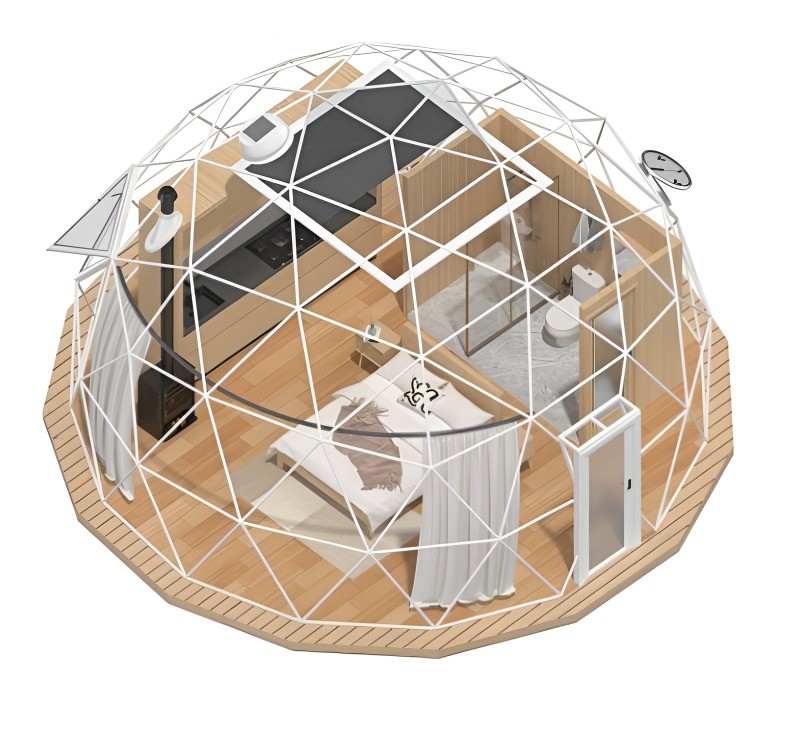
At its core, a geodesic structure is a framework made of interconnected triangles that distribute stress across the entire form. Instead of relying on long flat walls and a few load-bearing points, the structure shares weight and environmental pressure through a network of smaller components. The result is a building form known for strength, efficiency, and a striking visual presence that feels both modern and deeply connected to the landscape.
What Is Geodesic Structure, Exactly?
A geodesic structure uses a pattern of triangles arranged over a curved surface, usually forming part or all of a sphere. The geometry matters. Triangles are inherently stable, which means they resist deformation better than rectangles under changing loads. When many triangles work together, they create a shell that can handle wind, snow, and movement with impressive efficiency.
This principle is what gives geodesic domes their reputation for strength relative to weight. It is also what makes them so attractive in outdoor settings where weather exposure, site conditions, and installation logistics all shape the success of a project.
For hospitality buyers, the technical definition only goes so far. The real value is practical. A geodesic structure can create a spacious interior without the heavy structural demands of conventional construction, while delivering the kind of architectural identity that guests remember and photograph.
Why the Geometry Performs So Well
The curved form is not just visually distinctive. It changes how forces move through the building. In traditional rectangular structures, pressure often concentrates at corners, roof spans, and specific support points. In a geodesic system, forces are distributed more evenly throughout the frame.
That has several implications. First, it can improve resilience in demanding climates. Second, it can reduce the amount of material needed to create a strong enclosure. Third, it allows for a more open interior layout, which matters when you are trying to design a premium guest suite, wellness space, or event environment without awkward structural interruptions.
Of course, performance always depends on engineering, materials, insulation strategy, and installation quality. A geodesic structure is not automatically superior in every situation. But when properly designed for commercial use, it offers a compelling balance of structural integrity, energy efficiency, and guest appeal.
What Makes Geodesic Domes Different From Conventional Buildings
The difference starts with the shape, but it does not end there. Conventional buildings are usually planned around straight lines, standard roof pitches, and room-by-room segmentation. That approach can work well for many uses, especially where zoning, utilities, and familiar construction methods dominate the decision.
A geodesic dome takes a different path. Its envelope is compact and efficient, meaning it encloses a large amount of usable volume with relatively little exterior surface area. That can support better thermal performance when paired with the right insulation and weatherproofing system. In hospitality, this becomes especially valuable for all-season operations where heating and cooling costs affect margins.
There is also the guest experience factor. A dome does not feel like a generic room. The height, curvature, and panoramic potential create a sense of escape that many travelers are willing to pay more for. That premium is not just about aesthetics. It comes from the feeling of privacy, novelty, and immersion in nature without sacrificing comfort.
Why Outdoor Hospitality Operators Pay Attention to Geodesic Structure
For commercial operators, the appeal of geodesic structure goes beyond design theory. It solves several business challenges at once.
One is speed to market. Traditional construction often involves more site disruption, more subcontractor coordination, and longer timelines. Dome structures can simplify deployment, particularly on properties where access, terrain, or seasonality make full conventional builds less attractive.
Another is land sensitivity. Many operators want to add inventory without overbuilding the site or undermining the natural setting that gives the property its value. A modular dome approach can support lighter-touch development while still creating a high-end accommodation product.
Then there is differentiation. Outdoor hospitality has grown quickly, and guest expectations have followed. A simple tent platform or basic cabin may no longer be enough to command premium nightly rates. A well-executed dome built on geodesic principles can position a property as design-forward and experience-led, which is increasingly important in competitive regional markets.
The Business Case: More Than a Beautiful Shape
Design gets attention. Revenue performance keeps projects alive.
Geodesic dome structures are often considered by hospitality investors because they can align visual impact with practical returns. Their recognizable silhouette supports marketing. Their adaptable interiors support multiple uses, from luxury lodging and spa suites to dining pavilions and event lounges. Their modular nature can also make phased growth more realistic, allowing operators to test demand before expanding inventory.
This does not mean every dome project produces strong returns automatically. ROI depends on location, pricing strategy, occupancy, operating model, and guest experience design. But the structure itself can give owners a useful advantage: it creates an accommodation product that feels premium without requiring the same build complexity as many permanent luxury suites.
That is a meaningful distinction for landowners and developers looking to build their business while protecting capital and preserving flexibility.
What a Geodesic Structure Needs to Work in Real Conditions
The phrase “what is geodesic structure?” can sound purely academic until weather arrives. In commercial outdoor hospitality, the real test is performance over time.
A viable dome structure needs more than a geometric frame. It needs durable exterior materials, reliable insulation, proper ventilation, moisture management, and a foundation strategy suited to the site. It also needs to account for local codes, climate loads, guest comfort expectations, and operational wear.
This is where buyers should be careful. Not every dome on the market is built for year-round hospitality use. Some are better suited to seasonal events or temporary installations. Others are designed for commercial durability, with energy-conscious envelopes, weather resistance, and interior configurations that support premium stays.
That distinction matters if your goal is not simply to place a structure on land but to create a revenue-generating asset that can perform consistently across seasons.
Trade-Offs Worth Understanding
Geodesic structures offer clear advantages, but serious buyers should also understand the trade-offs.
Interior planning is different from a rectangular building. The curved wall line can affect furniture placement, storage strategy, and bathroom layouts. That is not necessarily a drawback, but it does require thoughtful design.
Customization also needs discipline. The most successful projects balance the dome’s natural architectural identity with operational needs such as housekeeping flow, guest circulation, and maintenance access. Too much focus on novelty can lead to spaces that photograph well but underperform in day-to-day use.
There is also the matter of positioning. A dome can command premium rates when it is paired with the right setting, amenities, and brand story. Without those elements, even a strong structure may not reach its full commercial potential.
Where Geodesic Structure Fits Best
Geodesic structures are especially well suited to properties that want to offer immersive stays with a strong design signature. That includes glamping resorts, wellness retreats, mountain or desert hospitality concepts, lakeside accommodations, private estates with rental ambitions, and event venues adding unique guest or gathering spaces.
They also fit operators who value expansion flexibility. Because dome-based development can often be staged in phases, it allows owners to grow with demand instead of committing to a large conventional build all at once. For many North American hospitality projects, that flexibility is part of the appeal.
For brands like StarWild Domes, the opportunity lies in turning that structural efficiency into something more meaningful: a refined guest sanctuary that performs as beautifully as it looks.
A geodesic structure is, in simple terms, a smarter way of using geometry to create strength, efficiency, and presence. In the right hospitality setting, it becomes something more than architecture. It becomes a way to shape memorable stays, protect the character of the land, and add inventory that earns its place on both the property and the balance sheet.