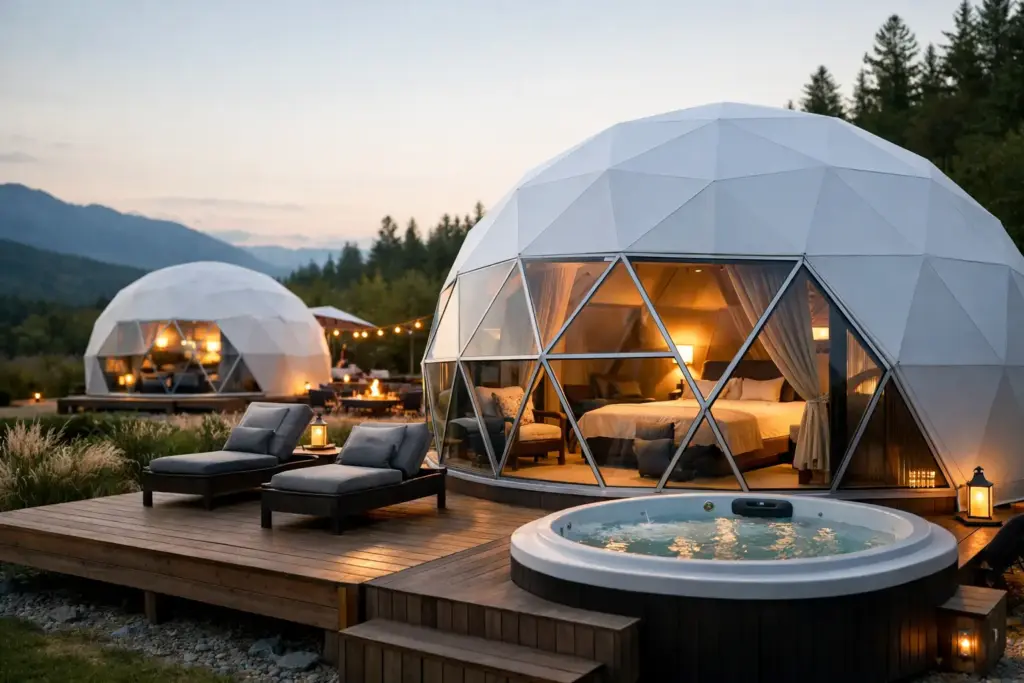
A standard cabin can add inventory. Few accommodations change how guests feel the moment they arrive. Geodesic dome structures do exactly that, which is why they have become such a compelling option for resorts, retreat operators, and landowners building premium outdoor hospitality experiences.
For operators in the U.S. and Canada, the appeal goes well beyond appearance. The right dome creates a rare balance of visual impact, all-season comfort, efficient deployment, and strong revenue potential. That matters when your goal is not simply to place a unit on land, but to build a business that stands apart in a crowded lodging market.
What makes geodesic dome structures different
Geodesic dome structures use a triangulated frame to create a curved enclosure that distributes stress efficiently across the shell. In practical terms, that means a structure with notable strength, impressive weather performance, and a highly recognizable silhouette that feels elevated from the first impression.
For hospitality, the geometry is only part of the story. Domes offer a panoramic interior quality that conventional rectangular builds rarely match. The shape naturally draws the eye upward, creating a sense of openness even within a modest footprint. Guests experience that volume as something special, and special is what supports premium nightly rates.
This is where design and operations start to align. A dome can feel immersive and refined while still being practical to install, maintain, and replicate across a growing property. That combination is difficult to find in traditional construction, where cost, timeline, and permitting complexity can quickly slow momentum.
Why geodesic dome structures are a smart hospitality asset
In outdoor hospitality, every new unit should answer two questions. Will guests want to book it, and will it make operational sense over time? Domes tend to perform well on both fronts because they create an experience first and an accommodation second.
Guests are not only paying for shelter. They are paying for atmosphere, novelty, comfort, and a closer relationship with the landscape. A well-designed dome delivers all four. The architecture feels intentional and memorable, especially when paired with transparent viewing panels, premium interiors, and a site plan that frames privacy and scenery.
From a business perspective, that emotional response matters because it supports stronger occupancy and pricing power. Distinctive accommodations generate attention, encourage social sharing, and help a property avoid competing only on rate. For operators trying to position themselves above standard glamping inventory, that differentiation can have a direct effect on revenue.
There is also a speed advantage. Compared with many fixed-build alternatives, dome projects can often move from concept to launch with less site disruption and less construction drag. That does not mean every project is simple. Site access, utility planning, climate demands, and local approvals still matter. But for many hospitality owners, dome deployment offers a more agile path to opening inventory and testing demand.
The guest experience is where return begins
The strongest glamping concepts understand that visual appeal alone is not enough. If a structure photographs beautifully but underperforms in comfort, operational wear, or seasonal usability, the model weakens quickly. The most effective domes are designed to support luxury standards, not just scenic stays.
Insulation, climate control compatibility, weatherproofing, and interior layout all shape the guest experience. A dome that remains comfortable through cold nights, summer heat, wind, and rain becomes a true hospitality product rather than a fair-weather novelty. That expands booking windows and creates more stable earning potential across the year.
Interior flexibility is another advantage. Domes can serve as private suites, wellness spaces, event lounges, dining venues, or reception environments. For operators, that means one structural format can support multiple revenue models on the same property. It also allows phased growth. You might begin with a small cluster of luxury guest domes, then add a spa dome, ceremony dome, or communal gathering space as the concept matures.
That adaptability is especially attractive for owners who want to protect capital while building toward a broader vision. Instead of committing to one rigid use case, they can shape the property around actual guest demand.
Durability, efficiency, and the reality of year-round use
A beautiful dome is easy to market. A durable dome is what protects long-term margins. For serious operators, structural performance is not a technical side note. It is central to whether the investment continues to serve the business through changing weather, changing occupancy patterns, and day-to-day wear.
High-quality dome systems are built for outdoor exposure and repeated hospitality use. That includes strong framing, reliable exterior membranes, insulation packages suited to local climate, and a design that sheds environmental stress effectively. In regions with snow, wind, or temperature swings, those details are not optional.
Energy efficiency also deserves attention. Because domes enclose space differently than conventional buildings, they can support efficient climate performance when properly specified. That can help reduce operating costs while keeping interiors comfortable for guests. The exact outcome depends on insulation levels, HVAC design, and local conditions, so there is no one-size-fits-all promise here. Still, for all-season operators, energy-conscious design is a meaningful part of the business case.
Relocation flexibility can be another strategic benefit. Some owners want permanent hospitality assets. Others value the ability to reconfigure a site, expand in phases, or move structures if the property plan evolves. Domes often provide more adaptability than traditional builds, which is useful when a concept is growing or when land use priorities shift over time.
Where domes fit best – and where they do not
Not every property needs geodesic dome structures, and not every dome project should be positioned the same way. The strongest fit tends to be properties that benefit from nature immersion, experiential lodging, and premium positioning.
Resorts can use domes to expand inventory without diluting the character of the landscape. Retreat operators can create private sanctuaries that support wellness, mindfulness, and high-touch programming. Event venues can introduce overnight stays or striking communal spaces that extend guest spend. Landowners entering hospitality can use domes to launch with a more distinctive concept than a standard cabin cluster.
The trade-offs are worth acknowledging. Domes are not meant to disappear into the background. Their visual identity is part of the value, so they work best when the brand wants that architectural presence. Interior planning also requires care because curved walls change furniture placement and storage strategies. And while installation is typically less disruptive than major conventional construction, successful projects still depend on disciplined planning around utilities, pads, drainage, access, and guest circulation.
This is why supplier choice matters so much. A hospitality dome is not simply a product drop. It is part of a broader operational system that includes guest expectations, maintenance realities, brand positioning, and expansion plans.
Planning geodesic dome structures for growth
The most successful dome projects are planned as business assets from the start. That means evaluating more than unit cost. Owners should look at guest appeal, seasonality, maintenance demands, infrastructure needs, average daily rate potential, and how easily the concept can scale.
If you are adding one or two domes to an existing property, the priority may be creating a premium accommodation category that lifts the brand and opens a higher price point. If you are developing a larger outdoor hospitality concept, the focus may shift toward repeatable deployment, operational consistency, and a site plan that supports future phases.
Either way, clarity matters. A dome that is positioned as a luxury suite should feel unmistakably premium in finish, comfort, and privacy. A dome intended for events should be designed around flow, visibility, and utility support. When the structure, use case, and business model align, the return story becomes much stronger.
This is the space where a specialized partner can make a real difference. Companies such as StarWild Domes understand that the decision is not just about shelter. It is about creating an experience that can perform commercially, hold up operationally, and grow with the property.
In a market where guests have more choice and higher expectations, memorable accommodations are no longer a fringe idea. They are one of the clearest ways to command attention and earn premium demand. Geodesic dome structures give hospitality owners a way to do that with elegance, flexibility, and practical business value. When chosen carefully and planned with intent, they do more than complement the landscape. They help define what the destination becomes.