
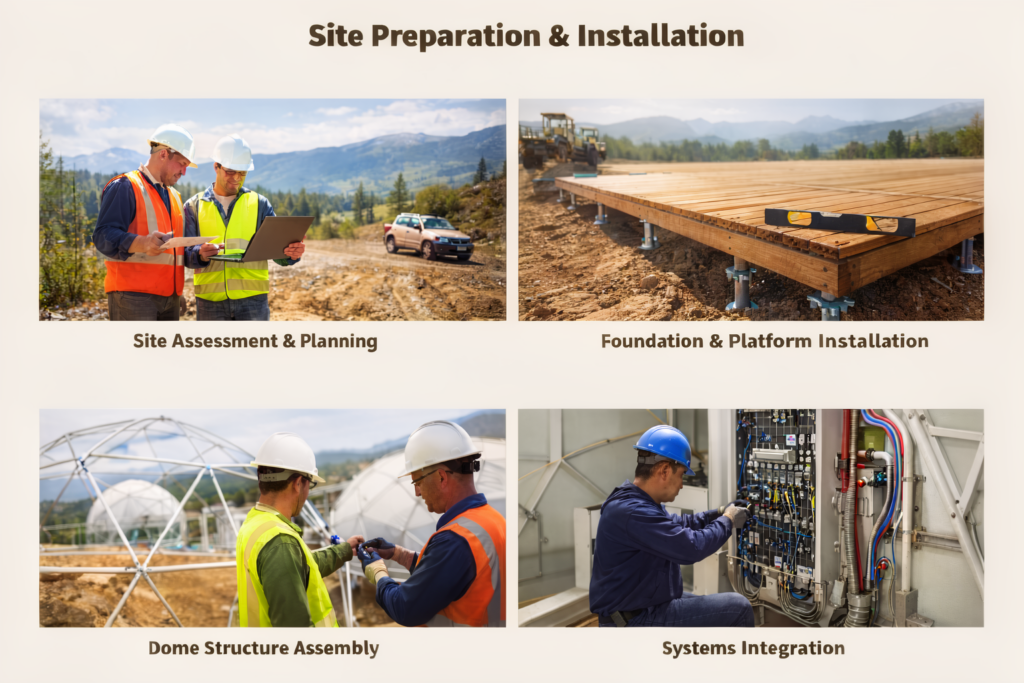
A glamping dome foundation is one of the most important structural decisions in any dome installation. The right base affects stability, drainage, frost protection, and long-term durability. This guide explains the best foundation options and how to choose the right solution for your site.
Do Glamping Domes Need a Foundation?
Most glamping domes require a stable, level base. While some smaller domes can be installed on compacted gravel, larger or commercial installations typically require engineered foundations to meet safety and zoning standards.
Foundation requirements vary by region and intended use.
Common Foundation Types for Glamping Domes:
Gravel Pad
A compacted gravel base is one of the simplest solutions. It allows drainage and is often suitable for temporary or seasonal installations.
Concrete Slab
Concrete provides maximum stability and is commonly required for commercial or permanent installations. It performs well in high-wind or heavy snow regions.
Helical Piers or Screw Piles
Helical piles elevate the structure slightly off the ground and minimize site disturbance. They are popular for eco-sensitive areas and uneven terrain.
Raised Wood Platform
A raised deck platform is common in resort-style builds. It improves drainage and creates a polished guest experience.
Climate and Soil Considerations
Before choosing a foundation, consider:
-
- Frost depth
-
- Drainage patterns
-
- Soil type
-
- Wind exposure
-
- Snow load requirements
The best glamping dome foundation depends on soil conditions, climate, intended use, and local building requirements.
Commercial vs Personal Installations
Commercial glamping businesses often require engineered drawings and inspections. Personal-use domes may have fewer structural requirements depending on the jurisdiction.
For permitting guidance, see our Glamping Dome Permits Guide
Working With Your Dome Supplier
A quality dome supplier should provide:
-
- Structural load data
-
- Anchor specifications
-
- Base diameter measurements
-
- Installation guidance
Explore our Luxury Glamping Domes for detailed structural specifications.
Foundation Costs for Glamping Domes
Foundation costs vary significantly depending on location, soil conditions, and chosen materials.
Typical ranges (North America):
-
- Gravel pad: $1,500–$5,000
-
- Raised wood platform: $5,000–$15,000
-
- Helical piers/screw piles: $8,000–$20,000
-
- Concrete slab: $10,000–$30,000+
Commercial builds generally require engineered drawings, which add design costs.
Actual pricing depends on site access, excavation requirements, and local labour rates.
Frost Line and Cold Climate Considerations
In colder regions, foundations must extend below the frost line to prevent heaving.
Frost depth varies by region. In many parts of Canada and northern U.S. states, frost depth can exceed 4 feet.
Failure to account for frost movement can lead to:
-
- Uneven flooring
-
- Door and window misalignment
-
- Structural stress
Consult local building codes or a structural engineer before selecting foundation depth.
Wind and Snow Load Requirements
Glamping domes are engineered structures and must be anchored correctly.
High-wind zones require:
-
- Deeper anchoring
-
- Reinforced perimeter fastening
-
- Concrete or engineered pier systems
Heavy snow regions may require:
-
- Increased structural support
-
- Engineered slab thickness
-
- Verified load ratings
Your dome supplier should provide wind and snow load certifications.
Drainage and Site Preparation
Proper drainage is critical regardless of foundation type.
Best practices include:
-
- Slight site grading away from the structure
-
- Perimeter drainage gravel
-
- Moisture barrier, where applicable
-
- Compacted sub-base
Poor drainage is one of the most common causes of foundation failure.
What to Avoid
-
- Installing directly on untreated soil
-
- Ignoring frost depth
-
- Underestimating drainage
-
- Skipping engineering where required
-
- Choosing the cheapest option without considering the climate
Short-term savings often lead to long-term structural issues.
Choosing the Right Foundation for Your Site
Selecting the right glamping dome foundation starts with a site assessment. Evaluate soil stability, drainage flow, slope, and long-term weather exposure before committing to a build method. Temporary seasonal domes may function well on compacted gravel, while permanent or commercial installations often require engineered concrete or pier systems.
Balancing structural safety, compliance, and long-term durability will prevent costly modifications later.
Conclusion
The best foundation for a glamping dome depends on location, climate, and intended use. Early planning ensures structural safety, compliance, and long-term durability.
Consult local building authorities and experienced installers before finalizing your foundation choice.